

On 24th June, His Majesty’s (HM) Government announced that it would radically alter the United Kingdom’s (UK) nuclear posture and capabilities. In doing so, Britain’s extended nuclear deterrent capability and commitment to the North Atlantic Treaty Organisation (NATO) was reaffirmed.
But it also hinted at a new reality: a revanchist Russia in the east and a declining American commitment to European security. This strategic environment makes bolstering the UK’s nuclear deterrent even more vital to regional strategic stability, but the planned purchase of 12 F-35A Lightning II Joint Combat Aircraft leaves Britain dependent on the United States (US) for a key aspect of its extended deterrence.
The F-35A purchase
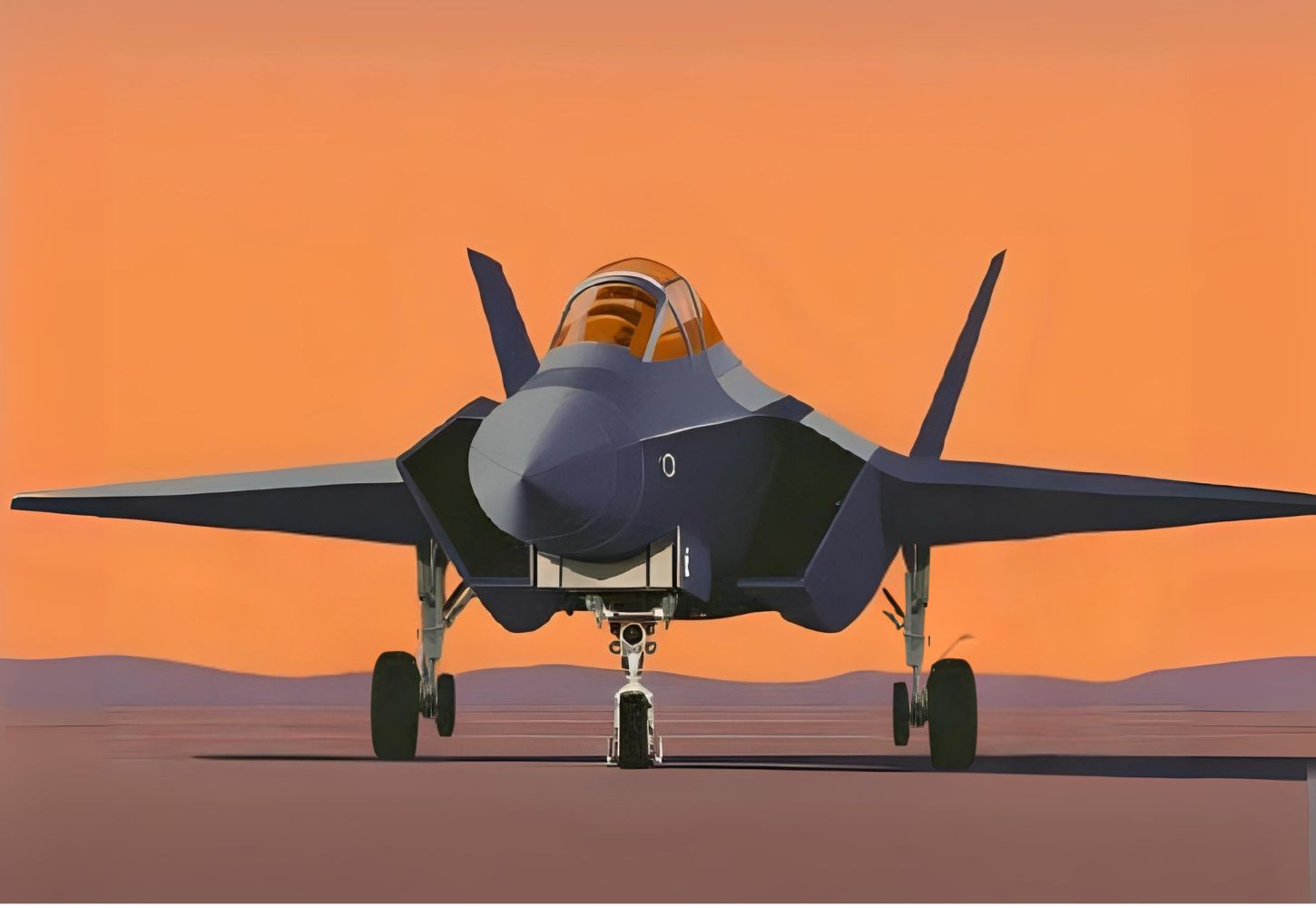
The anticipated change to the UK’s nuclear deterrent came with the announcement that Britain would acquire dual-capable F-35A aircraft as part of its ongoing procurement of 138 F-35s in total. Currently, the UK is in the process of completing its first batch of 48 F-35Bs, with an expectation that all will be delivered by the end of 2025, although the total aircraft in operation with the Royal Air Force (RAF) will in fact be 47, as one airframe was lost in 2021.
The F-35B is the short take-off and vertical landing variant of the programme, which can be used on Britain’s ski-jump aircraft carriers. The F-35A is the more common conventional take-off and landing variant, with greater range, agility and payload capacity.
For the first time in decades, the UK will have an air-dropped nuclear capability, alongside its nuclear-capable submarine-launched ballistic missiles.
The F-35A is also a dual-capable aircraft: it can carry both conventional and nuclear payloads. In announcing the F-35A purchase, HM Government therefore also announced a significant change to the British nuclear deterrent. For the first time in decades, the UK will have an air-dropped nuclear capability, alongside its nuclear-capable submarine-launched ballistic missiles. Britain will thus have a nuclear dyad – two different delivery systems in two domains (air and maritime) – akin to France and as opposed to the nuclear triad (land, sea and air delivery systems) maintained by the US, the People’s Republic of China (PRC), India, Pakistan and Russia.
NATO’s nuclear-sharing mission
The UK decommissioned the WE.177 gravity bomb – its last air-dropped nuclear weapon – in 1998, meaning there are no current nuclear devices which could be deployed from the F-35A. The plan instead appears to be for Britain to use American nuclear weapons on these aircraft. The UK will deploy the F-35As as part of NATO’s dual-capable aircraft mission, alongside seven other NATO allies (Belgium, Germany, Greece, Italy, the Netherlands, Turkey and the US).
There are three nuclear powers in NATO (Britain, France and the US) but the alliance’s nuclear-sharing arrangements mean that NATO as a whole is able to undertake a nuclear mission. It does so through the use of US-owned B61 nuclear weapons deployed in various locations across Europe, while the aforementioned seven NATO allies provide dual-capable aircraft which could be used in a nuclear mission. The UK will now become the eighth ally to contribute aircraft to this effort. This further bolsters Britain’s extended deterrent to its European allies; the UK has committed its independent deterrent to the defence of its NATO allies since 1962.
Unlike Britain’s existing Continuous At-Sea Deterrent (CASD), the second air-launched leg of the nuclear dyad is not independent. It relies on US-controlled nuclear weapons and would only operate in a nuclear mission under the NATO umbrella. This would require explicit approval from NATO’s Nuclear Planning Group (involving all allies except France) and authorisation from both the sitting prime minister and US president.
Nuclear options
Nevertheless, the addition of an aerial nuclear deterrent is a significant shift in Britain’s posture and deterrent capability, reversing nearly 30 years of singular reliance on CASD.
It would be impossible for a rival to understand implicitly that a Trident missile was intending to utilise a low-yield warhead, thus inadvertently creating an escalatory dynamic. The F-35A therefore gives the UK the notional ability to climb the escalation ladder more carefully, one rung at a time.
It provides greater flexibility in the UK’s nuclear deterrent capability, offering different delivery options beyond the strategic sea-based deterrent. With the potential use of B61 bombs, Britain may now be more able to use sub-strategic nuclear weapons and change the escalatory dynamic. While Trident is able to use sub-strategic munitions, the challenge in doing so is that any launch from a nuclear-capable submarine could be viewed by an adversary as a strategic strike. It would be impossible for a rival to understand implicitly that a Trident missile was intending to utilise a low-yield warhead, thus inadvertently creating an escalatory dynamic. The F-35A therefore gives the UK the notional ability to climb the escalation ladder more carefully, one rung at a time.
It is also part of a years-long effort to reverse the withering of Britain’s nuclear deterrent capability. The UK’s nuclear arsenal peaked at the height of the Cold War in the 1970s, with approximately 520 warheads available. As the Cold War came to an end, successive governments gradually reduced the arsenal – falling to around 400 operationally available warheads in the 1980s and 300 in the 1990s. The 1998 Strategic Defence Review further shrank the number of operationally available warheads by one third, to fewer than 200, with a total arsenal of 280 warheads. A 2006 White Paper on the deterrent continued the depletion of the stockpile to fewer than 160 operationally available warheads and a total stockpile of 225. Finally, the 2010 Strategic Defence and Security Review (SDSR) announced the intention to reduce the arsenal further still, with 120 operationally available warheads and a stockpile of no more than 180 by the mid-2020s – a third of the amount in the 1970s.
The 2010 SDSR proved the nadir in Britain’s nuclear arsenal. While these stockpile goals were repeated in the 2015 SDSR, by the time of the 2021 Integrated Review the need for an effective nuclear arsenal seemed more pressing. The cap on the stockpile was thus raised from 225 warheads to 260, ending a decades-long decline.
Deterring Russia
The UK’s expanding nuclear arsenal in recent years reflects the changing security environment on the European continent. A more aggressive Russia has used nuclear threats and coercion during its invasion of Ukraine, raising the spectre of nuclear use for the first time since the Cold War. At the same time, the Trump administration has caused some concern among European allies that the American commitment to defending Europe is far from ironclad.
The F-35A procurement decision should be seen in this light. With an expansionist Russia and a vacillating US, Britain’s extended deterrent becomes even more central for European strategic stability. Supporting NATO’s nuclear-sharing arrangement with dual-capable aircraft is a way to provide a more robust, more diverse deterrent capability while also bolstering the alliance’s combined deterrent more broadly. It also further entwines the US in Europe’s strategic deterrence at a time of waning American interest in the Euro-Atlantic region.
These are important goals, but they do not aid the UK’s own independent deterrent. The key question therefore becomes the following: should the UK invest in a British-manufactured and owned air-launched munition (and sufficient delivery vehicles) to bolster its own independent nuclear deterrent?
Christian Le Miere is CEO and Founder of Arcipel, a strategic advisory company, and Distinguished Fellow at the Council on Geostrategy.
To stay up to date with Britain’s World, please subscribe or pledge your support!
What do you think about this Memorandum? Why not leave a comment below?
The UK definitely needs it's own in house nuclear deterrent, as we can no longer rely on others. The fact that US provided nuclear weapons may only be used with their consent is not good enough. We have to look very closely at Russia and China and see the threats that may come from them. Having a second string to our bow is very important for this country and is the only way that we can viewed as strong enough , and a deterrent to our would be adversaries through that strength.