

Were the United Kingdom (UK) to give up its nuclear deterrent and decline to rebuild its conventional forces, it would not produce an immediate windfall for His Majesty’s (HM) Treasury. It would also leave Britain more dependent on the United States (US), France, and the North Atlantic Treaty Organisation (NATO) at a moment when European security assumptions are under pressure. Nevertheless, the case for nuclear abolition deserves a serious answer.
The abolitionist case is not confined to the margins. The Campaign for Nuclear Disarmament (CND) has long argued that the nuclear budget would be better spent on hospitals, housing, and public services. The Green Party is committed to pushing the UK to sign the Treaty on the Prohibition of Nuclear Weapons and to begin dismantling its arsenal. In March 2026, John Swinney, First Minister of Scotland, told the Scottish National Party (SNP) that ‘Trident nuclear weapons have no place in Scotland’, and promised that an independent Scotland would ban them in its constitution.
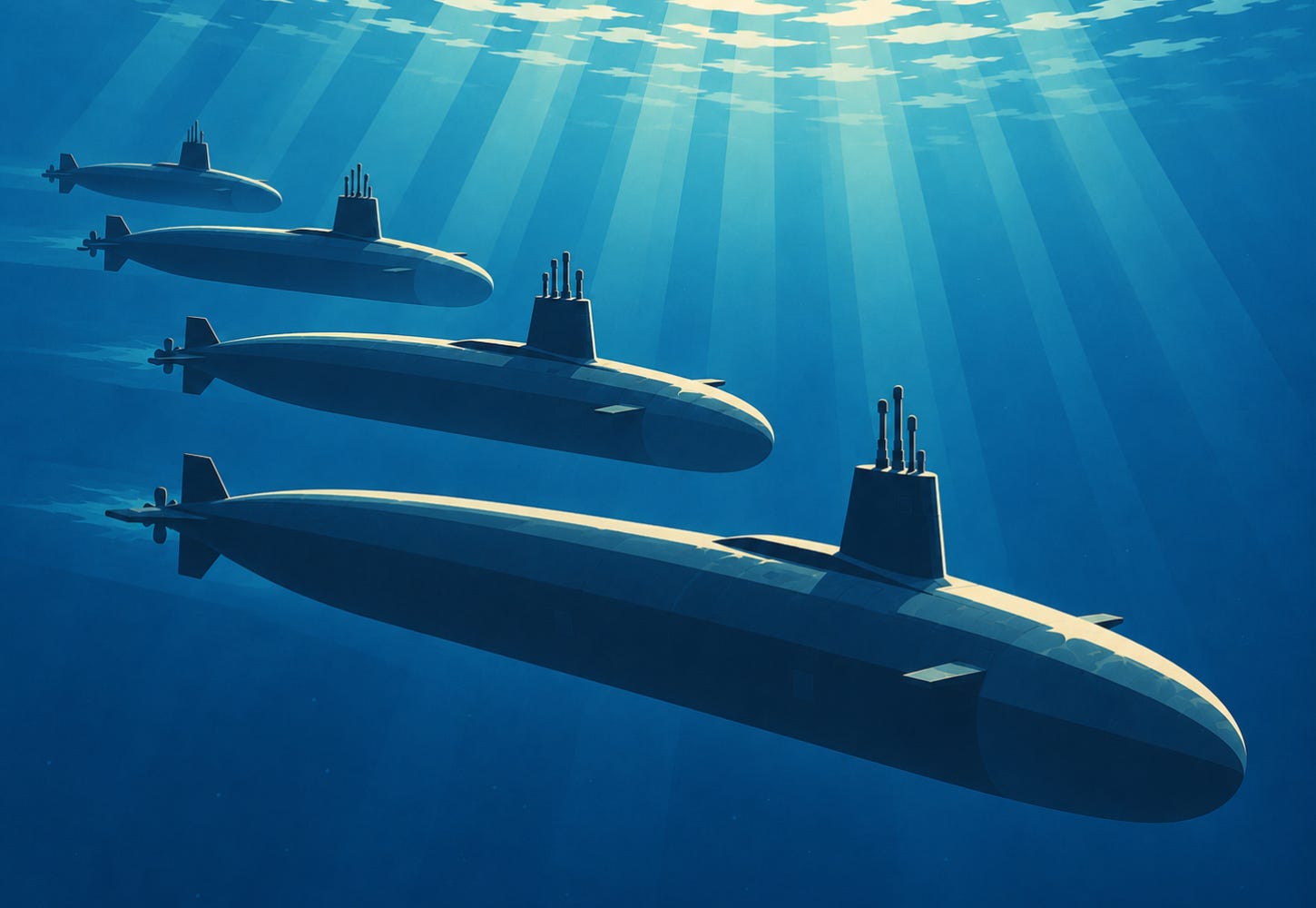
These arguments deserve a reply now. Public finances are tight, and every claim on them, including the nuclear one, should be tested. The decision is also timely: the four Vanguard class nuclear-powered ballistic missile submarines (SSBNs) are having their lives extended while the Dreadnought class is built, so any choice to stop would have to be made within the next few years. Britain has retired 23 nuclear submarines since 1983, and is only now dismantling the first. Abolition is possible, but it would be a long, costly, and largely irreversible process – not a switch to be flipped. The answers to two key questions decide in favour of retention: firstly, what would abolition actually save, and when; and secondly, what risks would the UK and its allies be assuming in exchange?
Who threatens Britain?
Russia is currently the only state whose language approaches nuclear intimidation. Its November 2024 doctrine broadened the circumstances for nuclear use and lowered the declared threshold. However, this is coercive signalling aimed at constraining NATO decisions, not a declared intention to strike the British homeland, and it is important to say so plainly.
In June 2026, Sir Keir Starmer, then Prime Minister, warned that NATO assessed that ‘there could be an attack by Russia on NATO as soon as 2030’. The alliance also judges the People’s Republic of China (PRC) to be on track to hold up to 1,000 nuclear weapons by the same date. Decisions taken now are being made for the 2060s: the Ministry of Defence (MOD) intends the Dreadnought class to sustain Britain’s nuclear Continuous At-Sea Deterrent (CASD) ‘out to the 2060s and beyond’.
Despite the reality of the nuclear threat, the immediate ones faced today are mostly non-nuclear – although this is, of course, in no small part due to the existence of the nuclear deterrent. In October 2024, Ken McCallum, Director General of MI5, described Russian military intelligence using ‘arson, sabotage, and more’ – evidenced in the Russian-backed arson attack on a Ukrainian-owned east London warehouse in March that year – and in 2025 announced that the agency had disrupted more than 20 potentially lethal Iran-backed plots in the past year. In November 2025, MI5 issued an espionage alert over Chinese officers cultivating parliamentary contacts through networking sites, and in October 2025, the National Cyber Security Centre named Beijing a highly sophisticated threat actor. No government would fire Trident over an arson attack, and no adversary expects it to.
The case for abolition taken seriously
The moral objection is the strongest part of the abolitionist case – indeed, the CND has called Trident ‘militarily useless, immoral, and hugely expensive’. There is a real diplomatic argument too: renunciation would strengthen the UK’s standing when it presses the Treaty on the Non-Proliferation of Nuclear Weapons (NPT) bargain on others – although it is unlikely that it would be strengthened to the point that any adversaries would follow suit.
There is also a sound strategic observation at its core: the role of nuclear weapons in deterring conventional aggression is ‘less clear’. Sabotage, espionage, cyber intrusion, and cable tampering call for resilience, policing, and air defence – not warheads.
What abolition would actually save
The fiscal case for abolition is weaker than either side usually admits. The House of Commons Library records in-service costs of about 6% of the defence budget (roughly £3 billion in 2022-2023), with £31 billion to build the four Dreadnought class SSBNs and a £10 billion contingency. Much of the wider Defence Nuclear Enterprise (DNE), however – nuclear propulsion, submarine building, regulation, and the skills base – would survive abolition, which brings its own decommissioning, site security, and workforce transition costs, and would require funded conversion for Barrow, Faslane, Devonport, and Aldermaston.
The realistic net dividend is in the low billions per year, arriving only after those costs are paid, and set against a rising baseline: the Defence Investment Plan sets out £298 billion of spending over the four years to 2029-2030, against the NATO pledge to spend 5% of Gross Domestic Product (GDP) on defence and wider security by 2035, of which 3.5% is for core defence. A few billion pounds per year is a genuine social choice, but it will not provide a transformation of the National Health Service (NHS), and more importantly is not worth the risks outlined.
Why the threats still justify retention
Three factors weigh decisively towards retaining Trident. Firstly, one category of threat has no conventional substitute: nuclear coercion, or a threat to the survival of the UK or a NATO ally by a nuclear-armed state. Unilateral renunciation of the nuclear deterrent would remove British control over that risk without removing a single Russian, Chinese, or North Korean warhead.
Secondly, the UK’s conventional shortcomings make the deterrent more necessary. The Strategic Defence Review (SDR) concedes that the British Armed Forces have been ‘hollowed out’; the Royal United Services Institute (RUSI) estimates munitions stocks would sustain about a week of high-intensity fighting; the Defence Committee found that the military would struggle to sustain warfighting; and transatlantic analysts warn of a window of vulnerability as Washington turns towards the Indo-Pacific and hemispheric defence. A country that cannot sustain a conventional fight cannot discard its last form of insurance.
Thirdly, gaps in the current posture are arguments for repairing rather than abandoning it. A missile fired from Kaliningrad would reach London in roughly six minutes, leaving no interlude for identifying the warhead; absent a Type 45 destroyer on the correct bearing there is no around-the-clock intercept option; and the UK has been assessed as being behind (an understatement, to say the least) on Integrated Air and Missile Defence (IAMD).
Dual-use systems such as Russia’s Oreshnik missile make warhead ambiguity a deliberate coercive instrument. Britain’s escalation ladder also has a missing rung: unlike the US and Russia, the UK has no sovereign sub-strategic option between a conventional response and a full strategic strike. Nuclear abolition would not close any of these gaps; it would only leave fewer options for facing the same challenges.
The insurance Britain should buy
In terms of nuclear deterrence, the UK should retain CASD and complete the Dreadnought programme. It should fund the missing escalatory rung, a sovereign sub-strategic option, and publish the cost rather than expanding the nuclear mission piecemeal through acquiring F-35A Lightning II Joint Combat Aircraft and joining NATO’s dual-capable aircraft mission without a stated total.
On conventional forces, HM Government should adopt the ‘consent budget’ figure as policy: core defence spending of 4.3-4.4% of GDP by the mid-2030s (about £115-130 billion a year) – above NATO’s 3.5% core target and within its overall 5% commitment. This should be spent on readiness rather than headcount, as the SDR intends.
This spending increase is necessary given Britain is still short of armour, warships, air defence, and artillery. The money should be conditional on delivery: the National Audit Office found the Equipment Plan’s forecast costs exceeded its budget by £16.9 billion, and ministers could name verifiable progress on only 12 of the SDR’s 62 recommendations. Thus, HM Government should consider fewer programmes that are properly funded, with published tracking against all 62 recommendations.
Homeland resilience should also be given a real budget. Finland maintains civil defence shelters for about 4.8 million people, Germany has committed €10 billion (£8.6 billion) to civil protection until 2029, and Poland added zł5 billion (£982.8 million) in 2025. Meanwhile, Britain’s Home Defence Programme has neither budget nor delivery date. Investment of around £1 billion per year to 2035 in areas such as undersea infrastructure, counter-sabotage, and cyber resilience would address the threats that the country actually faces. HM Government should also continue to press for risk reduction, verification, and reciprocal reductions, which is where the abolitionist diplomatic argument can do real work.
Conclusion
In exchange for the few billion pounds per year nuclear abolition would save, the UK would face a state like Russia that has lowered its nuclear threshold, with the prospect of a second nuclear-armed adversary with a growing risk tolerance in the PRC. Meanwhile, its forces would be unable to sustain a conventional fight and would have no answer of its own to nuclear coercion. That is not a trade worth making.
Thus, Britain should retain its nuclear deterrent, fund the missing escalatory rung, raise core defence spending to 4.3-4.4% of GDP by the mid-2030s, and invest around £1 billion per year into civil defence. HM Government should also say honestly that this is paid for through tax and borrowing, rather than out of a peace dividend that does not exist. The moral discomfort does not disappear; it is the price of insurance.
Nicolas Groffman is a lawyer and defence consultant. He studied Chinese at the University of Cambridge; founded Harligan Ltd., a cross-border advisory firm; and is General Counsel of Fitzroy Exports.
To stay up to date with Britain’s World, please subscribe or pledge your support!
What do you think about this Memorandum? Why not leave a comment below?