

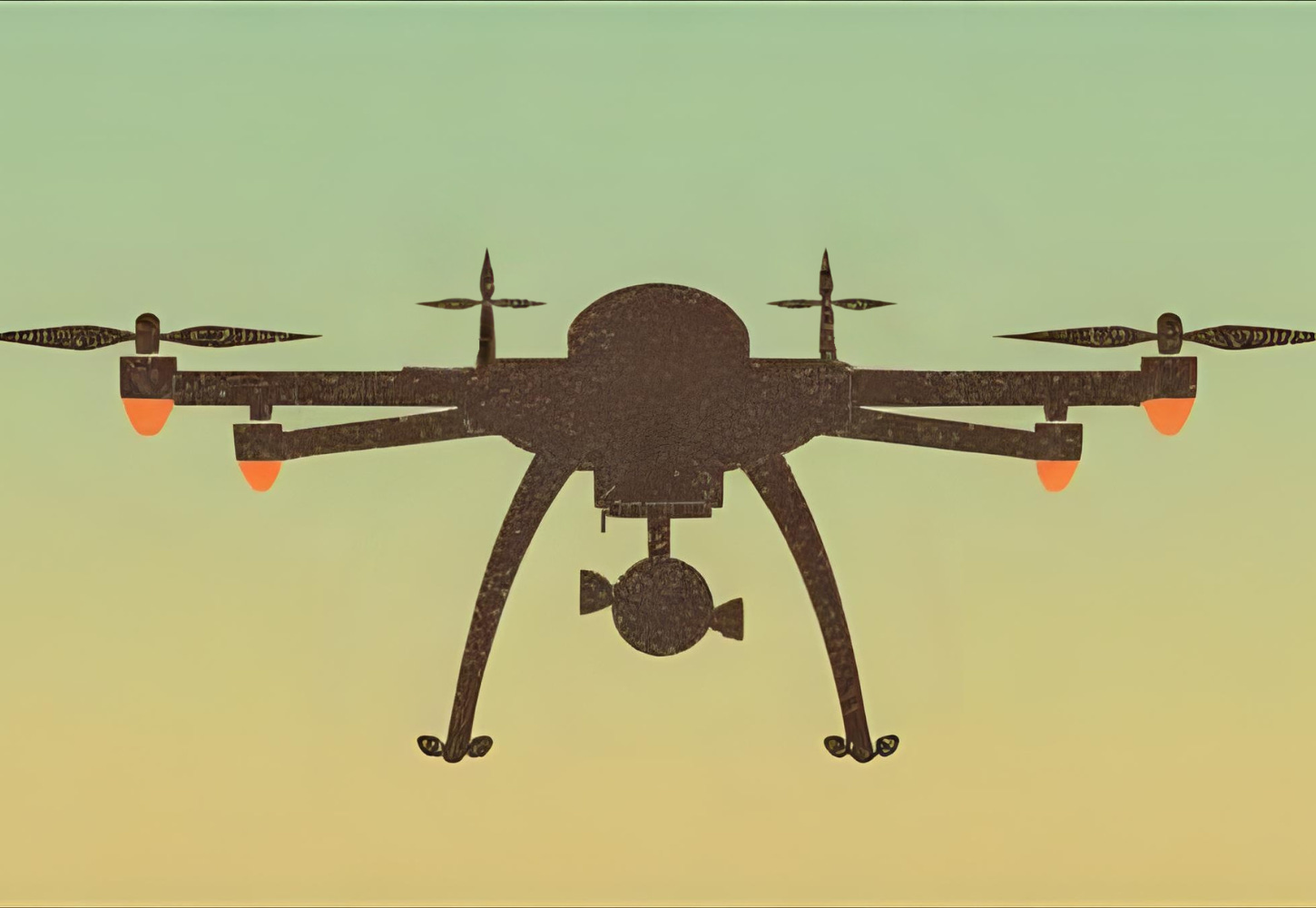
Recent malicious activity in Denmark and Germany using Uncrewed Aerial Systems (UAS) – drones – has brought into prominence the disruptive effect of such operations. Hostile actors have been able to shut down civilian airports and cause significant societal disruption and economic cost using relatively cheap drones.
In doing so, hostile actors – especially states such as Russia – are able to exploit weaknesses in European democracies. Hostile state activity below the threshold of direct conflict leads to confusion over responsibilities and appropriate responses; this in turn leads to a paralysis of decision over how best to respond to such threats.
A relatively small number of cheap civilian drones should not be able to paralyse the Critical National Infrastructure of NATO nations. Nor should there be a lack of suitable response other than passive hunkering down, especially in the nightmare scenario of UAS being variably armed…
For instance, in the recent set of incidents Danish authorities decided not to shoot down the drones due to the potential second-order threat to civilians or aircraft. Instead, the response was to shut down the operation of airports – an understandable and humane response, but unsustainable as a strategy in the long term.
A relatively small number of cheap civilian drones should not be able to paralyse the Critical National Infrastructure (CNI) of North Atlantic Treaty Organisation (NATO) nations. Nor should there be a lack of suitable response other than passive hunkering down, especially in the nightmare scenario of UAS being variably armed: whether with explosive – or even more disruptive Chemical, Biological, Radiological or Nuclear (CBRN) – devices.
It should be noted that this threat isn’t novel, and has been a consideration for years. Indeed, His Majesty’s (HM) Government published a Counter-UAS (C-UAS) strategy in 2019, and many CNI sites in the United Kingdom (UK) do have basic protective measures in place against simple UAS. However, the threat is evolving, turbocharged by Russian aggression in Ukraine, and more established responses are required. It is thus worth considering several broad principles of effective CNI protection against UAS.
The first principle, and most important, is a clear understanding of the threat, and requisite delegation and distribution of responsibilities between different organisations in both the private and public sectors. The National Protective Security Authority offers good guidance for private sector risk assessment, but there is little detail on how response should be coordinated on a regional and national level. There should be clear guidelines for who responds to UAS threats, and at what stage responsibility is escalated.
The second is good intelligence and detection. Intelligence as to whether threats are likely, and ensuring that they can be arrested at source prior to incidents occurring; detection to ensure early warning and rapid response if required. Standard air traffic control radar is often unable to detect small UAS, so different detection systems may need to be implemented around key CNI sites and on likely threat vectors.
The third is suitable protection from aerial threats. At the base level, this will be areas where humans and sensitive infrastructure or technology can be shielded from damage or surveillance, but also includes geofencing to offer a technical barrier to civilian drones from certain manufacturers. Thankfully, this is already in place in many CNI sites across Britain.
The fourth is appropriate active countermeasure systems and the permissions to use them. This is where a clear differential between civilian and military systems becomes important. Much of the higher-end equipment used by military forces is not always suitable for usage in a homeland security environment, either for legal reasons or due to the potential of second- and third-order effects, such as stray rounds.
However, civilian countermeasures may not be suitable for drones designed by hostile actors – for example, basic geofencing technologies are manufacturer-dependent, and will not be able to counteract modified or electronically-hardened drones. As such, a range of equipment held by appropriate agencies will be needed, with the ability to escalate rapidly if required.
For instance, one model may be for civilian organisations operating CNI – especially those particularly vulnerable to drone interference, such as air and sea ports, critical government buildings and prisons – to have broadened permissions from government under the Wireless Telegraphy Act 2006 to hold higher-level passive and active UAS defence systems. However, noting the cost of such measures for private companies, it is likely that higher-level responses will remain the domain of public sector organisations. As such, CNI operators should be able to call on a regional police C-UAS response team in an emergency, equipped with more powerful technical solutions.
If the threat is still considered too significant, an ability to draw on high-readiness military air defence teams should be an option as a rapid-response Military Aid to the Civilian Authorities (MACA). For example, No. 2 Force Protection C-UAS Wing of the Royal Air Force (RAF) has been called out to provide support under MACA in recent years for planned major public events.
However, a single Wing of two regular and one reserve Squadrons may not be sufficient to maintain a high-readiness response for domestic security while also fulfilling necessary military functions, especially in a time of crisis where multiple sites across the country may be targeted. Furthermore, there should be clear delineation between military and police responses to mitigate against duplication and confusion of effort.
The Ministry of Defence’s history of allocating high-readiness tasks to reservists is not promising; in general, British defence culturally defaults to resourcing high-readiness taskings with full-timers, further stretching the regular force.
June’s Strategic Defence Review suggested the implementation of a reserve-style unit for the protection of CNI or ‘Home Guard’, as it has been christened in the media. If so, this force would likely take the lead on responding to drone threats, rather than the police or RAF.
However, there have been no details of how this force will be set up, organised, trained or equipped, and how it would differ from the existing Reserves, especially considering that the Reserve force currently lacks sufficient personnel. Furthermore, the Ministry of Defence’s history of allocating high-readiness tasks to reservists is not promising; in general, British defence culturally defaults to resourcing high-readiness taskings with full-timers, further stretching the regular force.
In the meantime, regardless of this proposal, HM Government requires a flexible range of responses to threats which it can rely upon. One interim model, for example, may be to allocate C-UAS equipment and training to Standby Battalions held under Operation TEMPERER.
Finally, a principle rarely considered is appropriate retaliation. Hostile actors should feel pain for having attempted such an attack. At the base level, this may simply be rapid arresting and sentencing of perpetrators, collaborating with international partners if necessary. At the higher end, it would require appropriate but firm sub-threshold actions against hostile actors – whether state or non-state – including sanctions, technical measures and police or proxy action. Fundamentally, the best way to defeat hostile activity is to deter an adversary from conducting it in the first place.
Matthew Palmer is a former British Army Officer, the Sir John Moore Adjunct Fellow at the Council of Geostrategy and a Richmond Fellow of the Royal Navy Strategic Studies Centre. He also writes in a personal capacity at Cracking Defence.
To stay up to date with Britain’s World, please subscribe or pledge your support!
What do you think about this Memorandum? Why not leave a comment below?
It seems to me we need a hybridised version of dragonfire to protect every major civilian and government infrastructure site - proven technology that can easily protect against drone threats