

Policymakers in London, Brussels, Washington, Tokyo and Seoul are taking a specific scenario more seriously – a dual contingency in which Russia conducts an invasion of another European country while the People’s Republic of China (PRC) uses military force against Taiwan, which once seemed to be a remote possibility. If it occurs, such a dual contingency would stretch the United States’ (US) limited assets across two geographically distant areas.
The structural risk is evident. In Europe, the US underpins the North Atlantic Treaty Organisation (NATO), while maintaining two distinct bilateral defence treaties with Japan and South Korea in East Asia. Yet, an institutionalised security linkage between NATO’s European member states and US allies in East Asia is fairly limited. During a dual-contingency scenario, such a void would serve as a serious constraint in terms of deterrence and wartime coordination.
The lessons of the 1902 Anglo-Japanese Alliance
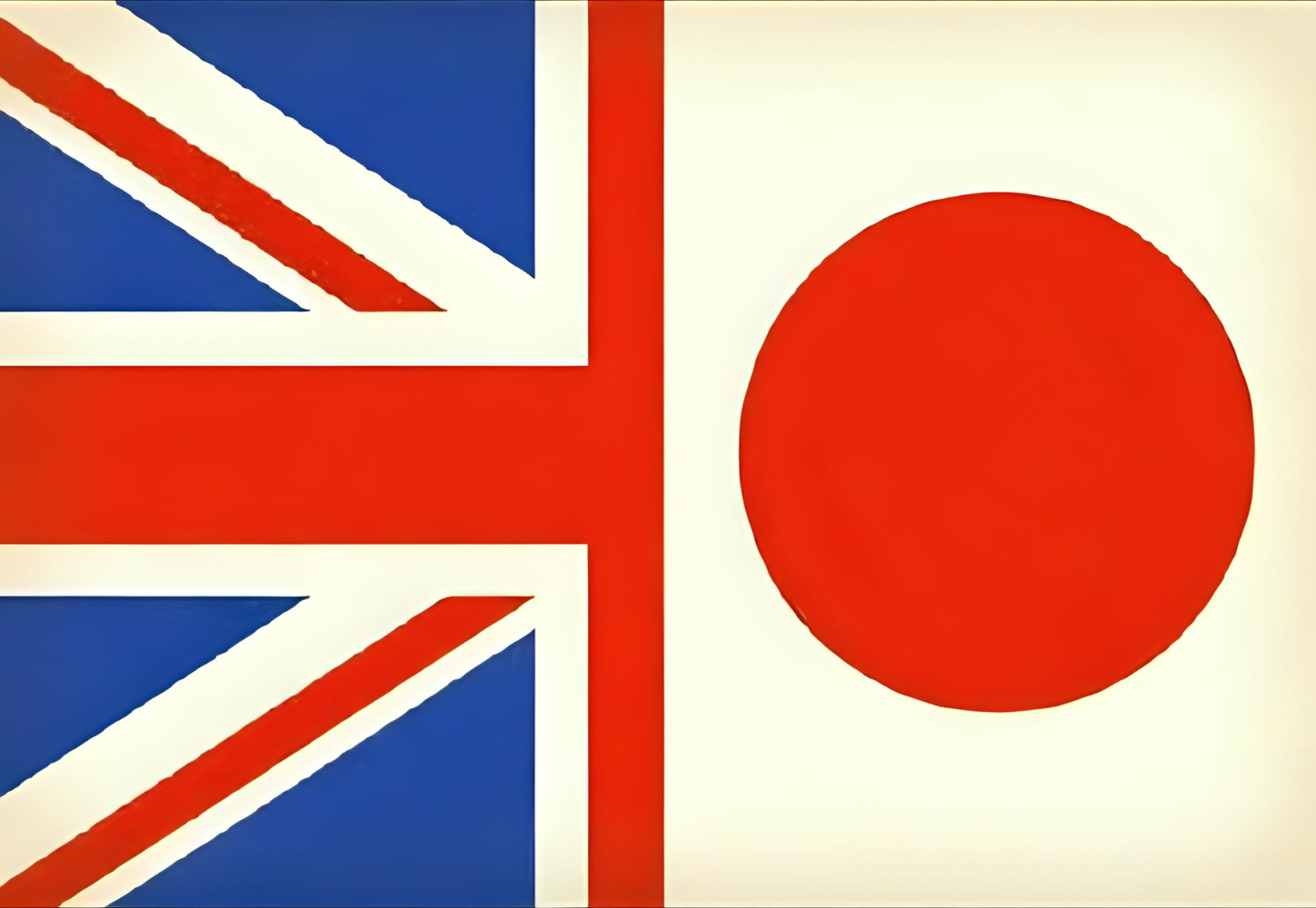
The 1902 Anglo-Japanese Alliance constitutes a notable historical precedent. In the early 20th century, the United Kingdom (UK) faced the challenge of containing the Russian Empire in the Far East while maintaining overstretched global commitments. The Royal Navy was already caught up in homeland defence and the protection of imperial sea lanes, and was concerned that Britain would be unable to deter Russia, both in Europe and in Asia. Meanwhile, Japan, wary of Russia’s attempt to advance into Manchuria and amid China’s chronic instability, sought to establish itself as a regional power.
The 1902 alliance was groundbreaking at the time. The UK and Japan agreed to support one another if attacked by more than one great power, yet to remain neutral if either fought against a single adversary. Such a carefully crafted agreement contained Russia and discouraged France – Russia’s ally – from intervening in East Asia. In addition, the alliance afforded scope for Britain to reduce its presence in the Pacific, while enabling Japan to assume a leadership role in regional deterrence.
Above all, the alliance signified a strategic shift for the UK. Britain acknowledged Japan not merely as a partner of convenience, but as an equal partner and security guarantor. Such a perception of interdependence was crucial. The UK was able to avoid excessive expansion, while Japan received international legitimacy and support in countering a common threat.
The lesson for today is not to replicate the treaty in form, but in function. A credible trans-regional security structure could prevent the opportunistic linkage of adversaries.
Deterrence proved effective. China’s vulnerability paved the way for foreign exploitation, yet the alliance guaranteed that such exploitation did not go unchecked. Russia’s expansion in the Far East, for example, was firmly halted through the Russo-Japanese War of 1904-1905. As a result, a clear and credible signal that Europe and Asia were strategically connected was conveyed to adversaries of Britain and Japan.
The lesson for today is not to replicate the treaty in form, but in function. A credible trans-regional security structure could prevent the opportunistic linkage of adversaries. The Anglo-Japanese Alliance demonstrated how two countries which are geographically remote yet connected through strategic necessity could efficiently pool resources, divide responsibilities, and effectively deter a simultaneous threat.
Why it matters at this juncture
The similarities between 1902 and the current situation are striking. Like the UK in 1902, the US is having difficulty maintaining deterrence in two theatres which are geographically distant yet closely interconnected. The US cannot be omnipresent, and if forced to choose between countering Russia in order to reinforce NATO or countering the PRC in order to defend Taiwan, its adversaries would conclude that American commitments are stretched thin, and thus vulnerable.
Adversaries of the rules-based international order have already factored such gaps into their calculations. Moscow is fully aware that NATO’s interests are concentrated in Ukraine and Eastern Europe, while Beijing is examining the vulnerabilities in Taiwan’s defences.
The lack of structural connection between Europe and East Asia exacerbates such vulnerability. NATO member states cannot play an official role in Asian security affairs, except for dispatching troops on a preliminary basis, while Japan and South Korea do not have an institutionalised voice within the transatlantic security structure. Such a disconnect would make coordination during a crisis complex. For instance, if American munitions stockpiles are diverted to Europe; who would support Taiwan? If US carrier strike groups are committed in the Indo-Pacific, who would defend NATO’s eastern flank?
Adversaries of the rules-based international order have already factored such gaps into their calculations. Moscow is fully aware that NATO’s interests are concentrated in Ukraine and Eastern Europe, while Beijing is examining the vulnerabilities in Taiwan’s defences. If these two countries simultaneously take action, the US’ logistical capacity – as well as its political will – would be tested to the extreme. Furthermore, an opportunistic actor such as North Korea, which has a long track record of conducting provocative actions and exploiting global distractions, could escalate regional instability by militarily attacking South Korea or Japan.
The urgency lies in the fact that today’s coordination remains mostly at a symbolic level. Although NATO is conducting political consultations with its Indo-Pacific partners, such measures have not developed into a permanent mechanism for operational readiness, joint planning and resource pooling. While such a mechanism is lacking at this juncture, the US risks being coerced to choose a zero-sum option which could undermine deterrence in both the Euro-Atlantic and the Indo-Pacific.
Practical policy recommendations
The priority is to develop practical, realistic and rapidly implementable measures which could strengthen connectivity between theatres without requiring a treaty negotiation that takes more than a decade. In NATO’s Brussels headquarters, a standing ‘NATO-Indo-Pacific Partners Council’ – which would primarily focus on logistics and cyber defence – could be created, including Japan and South Korea as regular members. Such a step would upgrade occasional consultations into a permanent mechanism for operational coordination.
Meanwhile, the US should lead a dual-contingency crisis tabletop exercise which includes NATO as well as its allies in Asia. Such exercises could examine how troop reinforcements, munitions flow, and Intelligence, Surveillance and Reconnaissance (ISR) assets can be redirected between the Euro-Atlantic and Indo-Pacific during a crisis. If the Indo-Pacific Command and the US European Command could co-host such an event by 2026, they would be able to identify major bottlenecks and reinforce their crisis planning.
European allies should also play a role. Major NATO navies, such as those of the UK, France and the Netherlands, could commit to rotational deployment of destroyers or frigates alongside like-minded partners in the Indo-Pacific. They could cooperate with the Japanese Maritime Self-Defence Force or the South Korean navy, and centre their focus on Anti-Submarine Warfare (ASW) and Sea Lines of Communication (SLOC) protection. These activities would give the US greater latitude for flexible deployment of its naval assets.
By signing reciprocal host-nation support agreements with NATO states, such as the US and France, Japan and South Korea could complement these efforts. Such measures would enable the immediate use of key facilities, including ports and airports, during a crisis without triggering a fresh political debate.
Lastly, defence-industrial cooperation should be widened. The NATO Support and Procurement Agency (NSPA) could explore a pilot arrangement which would allow Japan and South Korea to participate in joint procurement of artillery shells, precision-guided munitions and anti-air interceptors, albeit in a limited manner. Such a measure would create surge capacity that would benefit both Euro-Atlantic and Indo-Pacific partners.
All in all, these measures would offer practical ways to fill the gap and clearly signal trans-regional security cooperation to Moscow and Beijing without requiring a formal treaty revision among democracies in Europe and in East Asia.
Conclusion
By filling the gap between two geographically distant, yet strategically connected theatres, the Anglo-Japanese Alliance created an environment that could not easily be exploited by its adversaries. Today, NATO’s allies in East Asia are facing similar challenges and opportunities.
To bridge the security gap in the trans-Pacific, a new formal alliance is not necessarily needed. Yet, there is an urgent requirement for deliberate and institutionalised coordination mechanisms. The more Moscow and Beijing perceive that seamless connectivity exists among London, Brussels, Washington, Tokyo and Seoul, the less chance there is that these adversaries will test its durability and sturdiness in the first place.
Dr Ju Hyung Kim is president of the Security Management Institute, a defence think tank affiliated with the South Korean National Assembly. He is currently adapting his doctoral dissertation, ‘Japan’s Security Contribution to South Korea, 1950 to 2023’, into a book.
This article is part of the Council on Geostrategy’s Strategic Advantage Cell.
To stay up to date with Britain’s World, please subscribe or pledge your support!
What do you think about this Memorandum? Why not leave a comment below?