

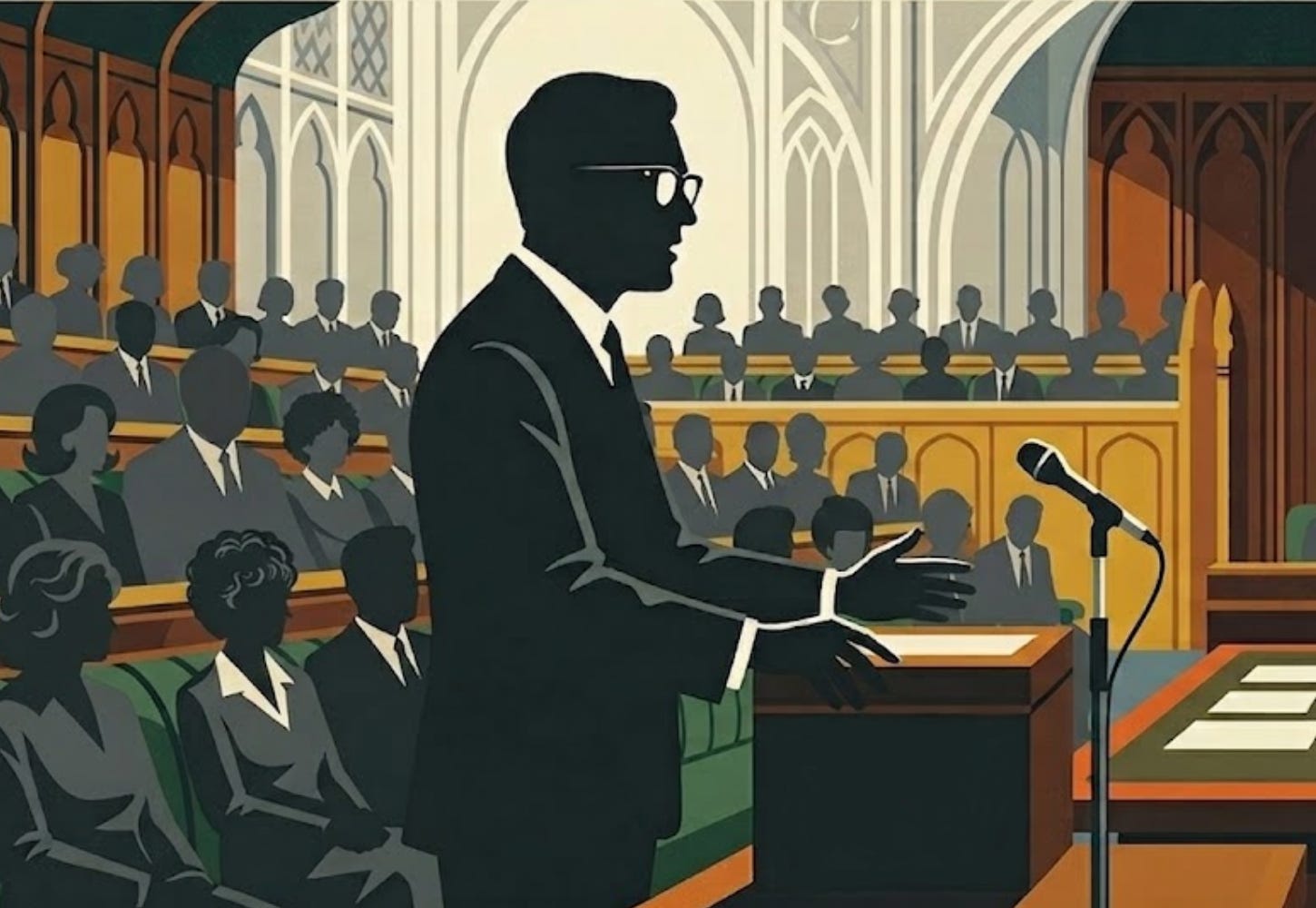
Andy Burnham voted for the Iraq War, and against an inquiry into its legality. 20 years later, he publicly regretted the ‘rage rhetoric and haste’ in which the operation was conceived, and the absence of a post-war plan. ‘If I had my time again’, he said in 2024, ‘I wouldn’t have voted for it’.
Like the party he will now lead, Burnham has been on a journey over national security, resilience, and defence. That journey has been shaped by the fragmenting global order. If he becomes Prime Minister, it will now be shaped by the man himself. And, given the deteriorating security environment, the journey cannot be over.
Burnham, like Sir Keir Starmer, former Prime Minister, is an instinctive Atlanticist – an instinct embedded into Labour’s DNA since Ernest Bevin, Foreign Secretary in the aftermath of the Second World War. But, like his predecessor, he faces a global economy shattered into competing blocs, amid intensifying geopolitical competition and a rolling, multifront crisis. He faces, above all, the challenge of creating a new European security architecture as the Atlanticist one crumbles.
As Prime Minister, Burnham would face the same basic dilemmas: how to handle a transactional Trump administration that is verbally hostile to the North Atlantic Treaty Organisation (NATO) and pursues American national interests relentlessly; how to maintain the United Kingdom’s (UK) role as ‘leading NATO ally’ in Europe as Germany and Poland rearm; how to defeat Russian aggression against Ukraine – and increasingly, via the sub-threshold route, against Britain – and above all, how to win popular support for the trade-offs and fiscal burdens needed if the UK is to meet the 2035 NATO spending targets.
To predict how a Burnham administration might respond, we need to understand the man, his municipal socialist principles, the domestic project he will pursue, and the factional balance inside the Parliamentary Labour Party, which will have more clout than it did under Starmer.
Like me, Burnham is a ‘not particularly religious’ Catholic. We grew up in the same northern English coal and cotton town – Leigh – and went to the same kind of denominational secondary school. So, when Burnham says ‘Catholic social teaching underpins my politics’, I have a good idea of what that means: a view of global affairs framed by a universalist vision of human dignity and equality. It demands that wars be just both in their cause and execution, and sees poverty, insecurity, and injustice as the causes of global instability.
Politically, he is likely to maintain the NATO spending pledges. To achieve a path towards them while maintaining fiscal credibility, he will need to attack the problem Starmer failed to solve, losing John Healey as Defence Secretary in the process: how to match the capabilities to the threats outlined in the Strategic Defence Review (SDR)? Given he is advised by economists who support controlled, hypothecated borrowing and a more directive state, and with service chiefs adamant that the current Defence Investment Plan (DIP) cannot be delivered on the money allocated, I would expect a resolution in the upward direction.
One defence issue that has split the Labour Party is the Northern Ireland Troubles Bill, which service veterans have complained opens them to retrospective legal action, while civilian victims of the violence complain does not go far enough. Al Carns, former Parliamentary Under-Secretary of State for the Armed Forces, who has been supportive of Burnham, made opposition to the Bill as it stands an issue in his resignation speech. However, minor rather than substantial changes to the legislation should be expected.
The bigger departure will likely come in the balance between hard defence efforts and the resilience agenda – which the Ministry of Defence (MOD) has begun to push forward via the ‘National Conversation on Defence’ and the Defence Readiness Bill, slated for 2027.
One of Burnham’s finest political moments, and indeed Manchester’s, was the city’s response to the 2017 Manchester Arena bombing, whose perpetrator killed 22 people and injured one thousand others. Burnham not only led the city with dignity through that trauma; in response to an inquiry into emergency service failings on the night, he commissioned a ten-year city resilience strategy. This promised to deliver ‘the capacity of individuals, communities, institutions, businesses, and systems within a city to survive, adapt, and grow no matter what kinds of chronic stresses and acute shocks they experience’.
That put Burnham ahead of the government during the Covid-19 pandemic and, as a result, the city has been recognised as a global leader in resilience. After Russia’s full-scale invasion of Ukraine began, Burnham founded the UNBROKEN Cities Network, together with the mayors of Lviv and Liverpool, to learn lessons from the conflict in real time.
For Burnham, therefore, resilience is not a euphemism for flood defences and police communications systems: it is about creating the kind of society and democracy that people will defend. His supporters, including former Shadow Defence Secretary Clive Lewis, have cited Finland as a role model.
Burnham has pledged to travel as little as possible and to focus on pressing domestic challenges. Yet, like Starmer, should he become Prime Minister, he will be dragged out of that comfort zone onto a world stage where engagement and face-to-face personal relationships matter intensely.
For the defence community, the optimum outcomes are as follows: Burnham restores the 3% of Gross Domestic Product (GDP) by 2030 target; he maintains all security related Bills in the King’s Speech, and manages to assuage veteran concerns about the Troubles Bill; he fast-tracks the Defence Readiness Bill, which His Majesty’s (HM) Government had slated only for 2027-2028, creating new powers to control public utilities in a crisis; he brings cognitive and hybrid resilience into the urgent/important box; and gets the whole of government enthused about the National Conversation, which begins today with the start of Armed Forces Week, but needs a morale boost following Healey’s departure.
The sub-optimal outcome would be if each of these challenges becomes a point of contest in a four-way battle between the Labour Party’s factions: the left, the soft left, the Blairite right, and the traditional right. The Members of Parliament (MPs) will have greater agency because, if Burnham becomes Prime Minister via acclaim rather than a membership vote, their continuous backing will matter.
Probably the most positive impact of Burnham’s accession, should it occur, is his declared preference for ten-year settlements – both for defence and welfare spending. A ten-year settlement for defence was something Healey asked for but did not get.
With the NATO 2035 target date to aim for, and the SDR goals as the pacing challenge, now is the perfect time to give the British Armed Forces, their families, and the defence companies that supply them something that Starmer’s retreat from the DIP has left absent: certainty.
Paul Mason is an Adjunct Fellow at the Council on Geostrategy; and a journalist, author, and political researcher.
To stay up to date with Britain’s World, please subscribe or pledge your support!
What do you think about this Memorandum? Why not leave a comment below?
I admire the author, and I hope he is right.
One of his first acts on defence is to reexamine how the budget is being spent. Ukraine tells us that drones are rather more critical than expensive obsolete hardware- so is there a possibility of getting many more bangs for our bucks whilst reducing overall spend? Do we really need aircraft carriers that don’t work? Is there much point in investing in tanks? Where will they be used? Look at European rather than US solutions, which come with strings attached, huge initial and ongoing costs and the whim of fickle American politicians as to whether we will get them even having paid up front……