

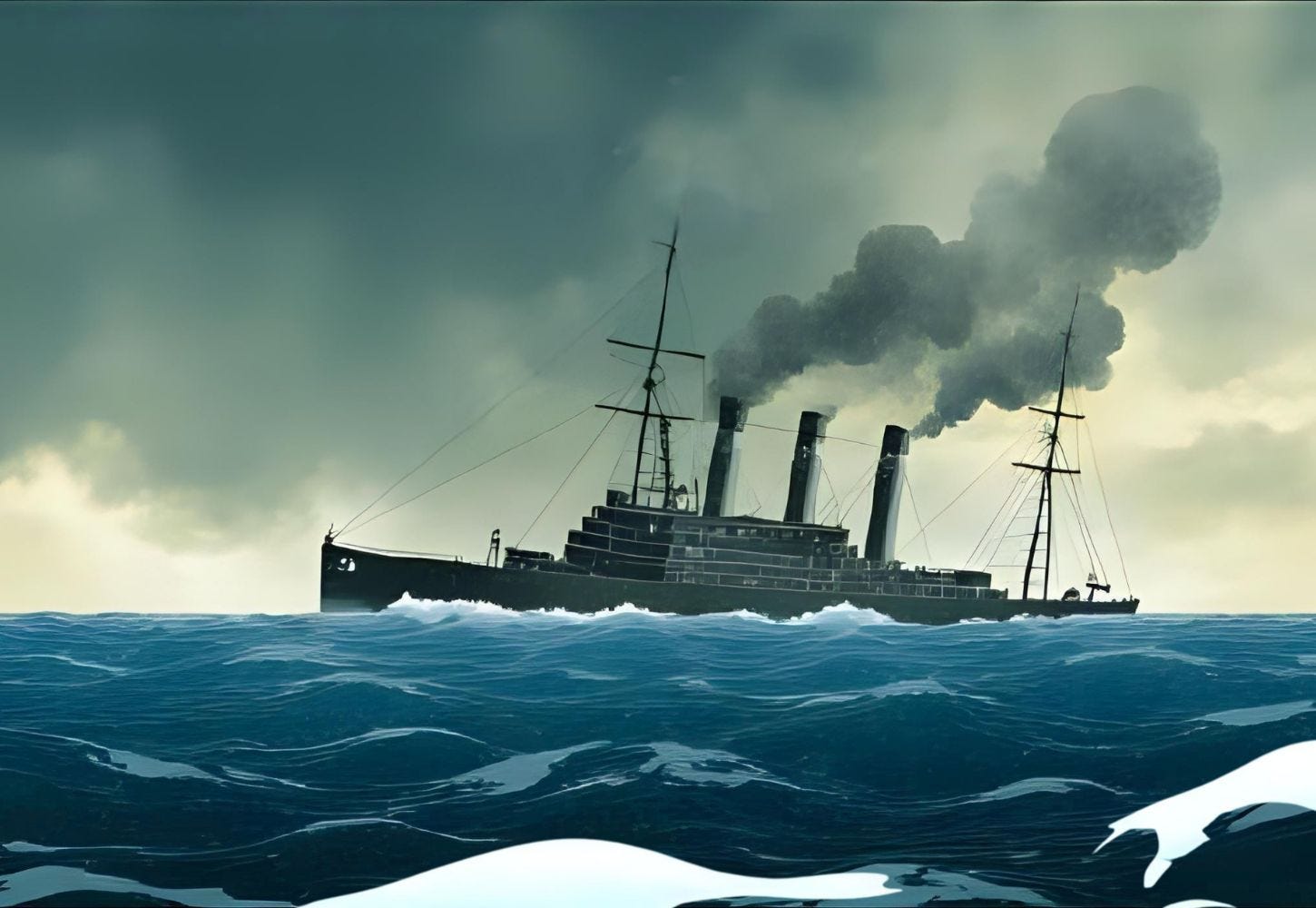
In 1905, the Imperial Japanese Navy inflicted a decisive defeat on Russia’s Baltic Fleet at the Battle of Tsushima, concluding the Russo-Japanese War and cementing Japan’s position as a great power. Less discussed, but no less consequential, was the United Kingdom’s (UK) role in shaping the strategic environment which enabled this outcome. Through the Anglo-Japanese Alliance, Britain provided critical diplomatic cover and deterred Russian reinforcements from transiting the Suez Canal. As tensions again rise in East Asia – this time between the United States (US) and the People’s Republic of China (PRC) – the lessons of that era are becoming increasingly relevant.
A recent Atlantic Council report warns of an emerging dual contingency involving simultaneous conflicts in the Taiwan Strait and on the Korean Peninsula. What once seemed improbable is now firmly within the realm of strategic planning. Beijing’s accelerating military assertiveness, Pyongyang’s provocative nuclear posturing, and evidence of growing coordination between the two authoritarian regimes raise the spectre of a simultaneous crisis which, whether resulting from deliberate coordination or independent yet converging actions, could overwhelm existing deterrence structures. For the UK, this is not a distant concern, but a direct test of its global posture, its strategic coherence and its commitment to a rules-based international order.
The historical parallel: Deterrence through alignment
In 1902, the Anglo-Japanese Alliance served as a cornerstone of British diplomacy in Asia. Although the UK remained formally neutral in the Russo-Japanese War, its alignment with Japan decisively altered Russia’s calculations. Fearing British naval intervention, Russia opted to send its Baltic Fleet on a perilous journey around Africa, only to meet destruction at Tsushima. London’s alignment was not based on ideological affinity, but on the logic of balance-of-power politics: Japan, as an ascendant regional actor, offered a means to check Russian ambitions without direct British entanglement.
This strategic logic – offshore balancing through credible alignment – remains pertinent today. In a region where direct British military engagement is unlikely to be decisive, the reinforcement of allied deterrence structures and strategic interoperability can provide meaningful stability. The UK’s modern Indo-Pacific posture, built through initiatives such as AUKUS and Carrier Strike Group deployments, lays the groundwork for such an approach. But credible influence requires more than symbolic deployments. It demands planning for multi-theatre conflict and reinforcing deterrence across linked regions.
A new dual-front reality
The Guardian Tiger tabletop exercises referenced in the Atlantic Council report simulate a chilling scenario: the PRC initiating aggression against Taiwan while North Korea opens hostilities against South Korea. In the simulation, North Korea escalates to the use of tactical nuclear weapons. The US, rather than retaliating in kind, opts for a limited conventional response to avoid wider nuclear war. The unintended consequence? A collapse in allied confidence and a dramatic erosion of extended deterrence credibility.
This scenario is not implausible. The PRC and North Korea maintain separate command structures and political incentives, yet their mutual interest in undermining American regional influence could produce a convergence of opportunism. For US allies such as South Korea and Japan, any hesitation in American response – especially in the nuclear domain – could provoke independent deterrent calculations. The result would be a fractured alliance landscape and a spiralling regional arms race.
Yet, the ramifications extend further. Should the US military face the prospect of fighting on two East Asian fronts while sustaining commitments in Europe – particularly amid Russian aggression against Ukraine or along the North Atlantic Treaty Organisation’s (NATO) eastern flank – the limits of even a global power’s capacity become clear. Strategic prioritisation, rather than superiority, becomes the core challenge. For Britain, this emerging reality underscores the need to view deterrence not as regional or sequential, but as inherently global and interdependent.
Britain’s role: Beyond symbolism
The UK has signalled its ambition to play a sustained strategic role in the Indo-Pacific, and has taken concrete actions to support this objective. HMS Queen Elizabeth’s 2021 deployment demonstrated long-range maritime reach, and the AUKUS partnership has laid the foundation for deeper technological and defence integration with the US and Australia. However, the credibility of Britain’s Indo-Pacific strategy depends on three elements: alignment, readiness, and coordination.
The prospect of a dual Taiwan-Korea crisis unfolding in parallel with continued Russian aggression towards Eastern Europe demands integrated planning across governmental departments and between allies.
Firstly, alignment. The UK should not attempt to replicate American power, but must enhance its ability to reinforce regional deterrence. This includes deepening security relationships with Japan, South Korea and Association of Southeast Asian Nations (ASEAN) partners, not only through bilateral engagement, but also through multilateral planning structures which mirror NATO’s coherence. As in 1905, Britain’s value lies not merely in its force projection, but in the political and strategic clarity it offers to regional allies.
Secondly, readiness. The UK must adapt its force structure and contingency planning to account for multi-theatre stress. The prospect of a dual Taiwan-Korea crisis unfolding in parallel with continued Russian aggression towards Eastern Europe demands integrated planning across governmental departments and between allies. This means institutionalising the connection between Euro-Atlantic and Indo-Pacific planning – ensuring that one theatre is not left exposed while the other is prioritised.
Thirdly, coordination. While NATO’s formal remit remains the Euro-Atlantic, Britain should act as a diplomatic and strategic bridge. Trilateral dialogues which connect NATO, AUKUS and the US Indo-Pacific Command (INDOPACOM) could ensure shared assessments of risk and capacity. In practical terms, this might involve establishing a UK-led coordinating mechanism for rapid reinforcement, maritime de-conflicting and strategic messaging across regions.
Avoiding the trap of reactive improvisation
Failure to deter simultaneous aggression in East Asia could undermine global confidence in the rules-based international order, embolden autocracies elsewhere and strain already stretched military alliances. The lesson is clear: deterrence should be integrated, not reactive.
In 1905, Britain’s strategic foresight prevented direct entanglement while shaping the regional outcome. Today, however, the global security environment is far more interdependent. Failure to deter simultaneous aggression in East Asia could undermine global confidence in the rules-based international order, embolden autocracies elsewhere and strain already stretched military alliances. The lesson is clear: deterrence should be integrated, not reactive.
This applies particularly to nuclear signalling. The Guardian Tiger exercise revealed that ambiguity in US nuclear posture could drive allied proliferation or decoupling. The UK, as a nuclear-armed state and close ally of both the US and East Asian partners, can serve as a stabilising interlocutor. It should advocate for clearer declaratory policies which reinforce the credibility of extended deterrence without escalating thresholds for nuclear use.
Recommendations for British policy
To ensure that Britain’s Indo-Pacific posture aligns with the strategic demands of an increasingly complex security environment, several measures should be undertaken. First, the UK should institutionalise Indo-Pacific planning within the Ministry of Defence and the Foreign, Commonwealth and Development Office (FCDO), incorporating clear scenario-based contingencies which address the possibility of dual-theatre crises. Second, interoperability initiatives with key regional partners – namely Japan, South Korea and Australia – should be expanded beyond naval exercises to include areas such as cyber defence, logistics coordination and command and control integration.
Third, Britain should establish a trilateral consultation forum which links NATO’s Euro-Atlantic defence planning with the strategic initiatives of AUKUS and US INDOPACOM. London is well-positioned to act as a bridging actor across these theatres. Fourth, the UK should support the development of regional crisis management mechanisms by directly participating in early warning and de-escalation frameworks involving Taiwan, South Korea and ASEAN member states. Finally, to avoid ambiguity in times of crisis, the credibility of deterrence signalling should be reinforced through joint strategic communications and nuclear consultation exercises with key allies.
Strategic clarity, not strategic nostalgia
The worlds of 1905 and 2025 differ in technology and geography, but are converging in complexity and risk. As great power competition re-emerges and regional revisionists test the boundaries of the international order, Britain must not retreat into symbolism. Instead, it should embrace its unique position – as a Group of Seven (G7) power, a NATO pillar, and an Indo-Pacific actor – to reinforce deterrence, promote strategic cohesion and pre-empt the cascading crises which history warns may lie ahead.
The lesson of Tsushima is not simply that alliances matter. It is that credible alignment, when strategically signalled and backed by readiness, can shape outcomes without firing a shot. The UK must act now to ensure that any future conflict in East Asia is deterred, not managed after the fact.
Dr Ju Hyung Kim is president of the Security Management Institute, a defence think tank affiliated with the South Korean National Assembly. He is currently adapting his doctoral dissertation, ‘Japan’s Security Contribution to South Korea, 1950 to 2023’, into a book.
To stay up to date with Britain’s World, please subscribe or pledge your support!
What do you think about this Memorandum? Why not leave a comment below?