

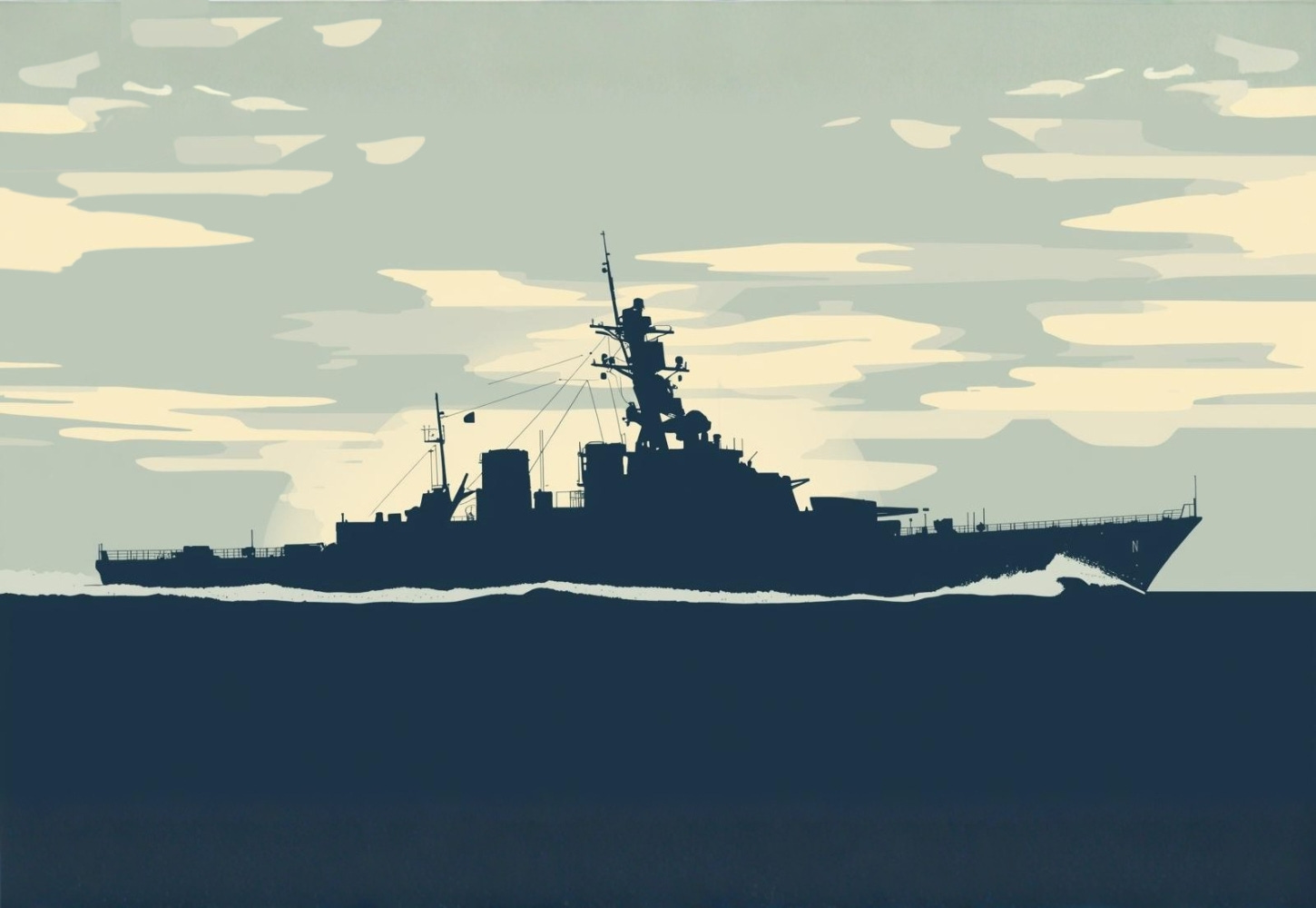
The United Kingdom (UK) and Norway have significantly deepened their defence relationship since 2024 through a strategic partnership spanning bilateral agreements, industrial cooperation and coordinated operations. The Lunna House Agreement, announced on 4th December 2025, establishes an interchangeable British-Norwegian Type 26 Anti-Submarine Warfare (ASW) frigate fleet, and formalises joint operations to protect undersea critical infrastructure – reflecting heightened Russian maritime activity in the North Atlantic and convergent threat assessments.
Industrial measures include Norway’s purchase of at least five Type 26 frigates from BAE Systems via a £10 billion programme – the UK’s largest warship export deal by value – and deeper collaboration on missiles, torpedoes and uncrewed systems. Key factors also include improved interoperability, rapid reinforcement and resilience to sub-threshold threats.
But what are the drivers of this maritime partnership, its components, and overarching consequences for British, Norwegian and European defence?
Strategic drivers
Both countries explicitly anchor defence and naval cooperation in their shared membership of the North Atlantic Treaty Organisation (NATO) – which remains the cornerstone of their respective security – and the Joint Expeditionary Force (JEF). Yet, the rationale goes beyond common membership of the transatlantic alliance.
The necessity of monitoring and deterring Russian naval activity across NATO’s northern flank – alongside the imperative to protect the undersea cables and pipelines that underpin Europe’s economic and military connectivity, but remain vulnerable to sub-threshold attacks – are key determinants of the partnership…
Indeed, British-Norwegian defence integration is driven by a shared geography and convergent threat assessments in the High North and North Atlantic, including the Greenland-Iceland-UK (GIUK) gap. These constitute key operational areas due to their proximity to Russia’s maritime approaches and core nuclear bastion.
The necessity of monitoring and deterring Russian naval activity across NATO’s northern flank – alongside the imperative to protect the undersea cables and pipelines that underpin Europe’s economic and military connectivity, but remain vulnerable to sub-threshold attacks – are key determinants of the partnership, calling for joint patrols and synergistic efforts.
Components of the maritime partnership
Bilateral cooperation framework
The British-Norwegian defence partnership was crystallised in December 2024 with the Joint Declaration on the Norwegian-UK Strategic Partnership. The two countries committed to deeper bilateral defence cooperation ‘across all domains’, joint capability development and enhanced interoperability. The declaration stresses cooperation in NATO and the JEF, and resilience against sub-threshold threats – including cyber, espionage and disinformation.
February 2025’s Joint Statement on Enhanced Defence Cooperation was oriented towards a multifaceted and ambitious defence agreement. It prioritises defence industrial ties, interoperability and interchangeability, intelligence sharing, defence of critical infrastructure, countering sub-threshold threats, and High North and North Atlantic strategic cooperation. It also confirmed co-leadership of the Maritime Capability Coalition supporting Ukraine – in particular in relation to minehunting capabilities – and highlighted longstanding Arctic training ties between the Royal Marines and the Marinejegerkommandoen (the Norwegian Marines) as well as Norway’s participation in the UK’s Carrier Strike Group 2025 deployment.
Finally, the Lunna House Agreement established a combined fleet of at least 13 Type 26 frigates (eight for Britain, the aforementioned minimum of five for Norway) to operate interchangeably, with shared maintenance and common standards. Their purpose is to hunt Russian submarines and protect undersea infrastructure.
Both countries reaffirmed NATO as the cornerstone of transatlantic security, integrating bilateral efforts with alliance deterrence and defence posture in the High North. Similarly, the JEF remains a prominent framework for rapid, scalable operations with like-minded northern European allies, while the Northern Group provides political-military coordination across the region.
Defence industrial cooperation
Within the parameters of this partnership, defence industrial cooperation holds a central role, in particular the Type 26 frigate programme. Norway’s purchase of the frigates is expected to support around 4,000 British jobs and more than 400 suppliers, advancing interoperability and long-term joint life cycle sustainment. The programme underpins the Lunna House Agreement’s interchangeable fleet concept and common ASW standards.
In addition, the UK’s adoption of Norway’s Naval Strike Missile (NSM) strengthens the common munitions baseline, while Sting Ray torpedo collaboration aims to enhance stockpiles. The joint development and adoption of autonomous maritime systems is pursued under NATO’s High North efforts, and will constitute a cornerstone of British and allied lines of defence against Russia’s sub-threshold attacks in the maritime domain.
These programmes highlight a shift towards strengthening the European Defence Technological and Industrial Base (DTIB) by reducing fragmentation, sharing upfront costs and developing mechanisms to shield European allies from the effects of geopolitical volatility on the defence sector.
Operational cooperation
The British-Norwegian defence partnership does not stop at political intent, strategic alignment and industrial cooperation; it extends to operational cooperation. In the North Atlantic and High North, the UK and Norway prioritise joint ASW patrols in the GIUK gap, expanded maritime surveillance (including P-8 Poseidon surveillance aircraft operations), and protection of undersea cables and pipelines, citing a reported 30% increase in Russian vessels near British waters over two years.
The combined frigate fleet will operate with shared facilities and logistics, enabling rapid deployment and reinforcement across the North Atlantic. The Royal Norwegian Navy will also contribute to future UK-led Carrier Strike Group deployments, reinforcing long-term maritime integration.
Implications for defence policies and postures
The Lunna House Agreement operationalises interchangeability at fleet level, aligning with British objectives to step up European security and consolidate industrial bases while also enhancing deterrence and defence against Russian naval threats. The adoption of NSM and common ASW logistics improves munitions resilience and through-life support across British-Norwegian fleets.
This constitutes a first, but substantial, step towards reinforcing broader European defence. It contributes directly to the UK’s security and defence objectives in the High North and North Atlantic. Moreover, it sends a strong political message to both the Kremlin – ‘we are ready to face aggression’ – and Washington – ‘we can develop bold solutions to strengthen European defence’.
For Norway, the Lunna House Agreement formalises shared infrastructure and potential prepositioning, strengthening national and allied crisis response capacity and posture. The acquisition of Type 26 frigates and an expanded British presence in the High North increases maritime reach, rapid reinforcement options and Arctic readiness, which is consistent with Oslo’s long-term defence plan.
Mitigating risks and actionable next steps
Usual DTIB bottlenecks (e.g., schedule, cost, supply chain, workforce) are expected to expand in the context of expansive order books throughout Europe as a result of new NATO defence pledges and capability targets. Addressing these requires robust governance and aligned requirements.
Both Britain and Norway signal government-to-government oversight and shared maintenance facilities to mitigate risks. Yet, the question that remains is how not to overwhelm the UK’s DTIB, already saturated in response to increased orders.
To overcome bottlenecks, Britain should expand and modernise shipyard capacity while guaranteeing workload and training pipelines; invest in apprenticeships and reskilling programmes to build a mobile, highly skilled workforce; and strengthen supply chain resilience through strategic stockpiling, dual-source qualification and stress-testing surge plans. At the political level, it is crucial to develop mechanisms to stabilise budgets; streamline innovation contracts; and ensure governance and delivery benchmarks. This creates an integrated ecosystem linking government, industry, academia and regional hubs.
Achieving coherence requires a framework that links operational posturing with technological innovation and information security while ensuring interoperability and burden-sharing. Efficiency will depend on clear governance structures, joint capability roadmaps and mechanisms for rapid decision-making that align national priorities with collective objectives.
One of the key challenges for the defence partnership will be to approach cooperation comprehensively across multiple domains and dimensions. Beyond traditional surface combatants, the agenda should integrate uncrewed systems, counter sub-threshold warfare measures, cyber resilience and disinformation mitigation. An integrated British-Norwegian sub-threshold warfare capability framework should operate across geographic and military domains (although with a strong maritime component) to reinforce national, regional and European defence.
Achieving coherence requires a framework that links operational posturing with technological innovation and information security while ensuring interoperability and burden-sharing. Efficiency will depend on clear governance structures, joint capability roadmaps and mechanisms for rapid decision-making that align national priorities with collective objectives. This will eventually enable the partnership to address Russian threats while remaining agile in the face of evolving challenges.
Ultimately, as well as deepening British-Norwegian defence cooperation, the agreement could serve as a blueprint for enhanced wider British-European defence and security cooperation in order to address capability and operational gaps against maritime and sub-threshold threats.
Prof. Basil Germond is the Co-Director of the Security Research Institute at Lancaster University, and Professor of International Security in the School of Global Affairs.
To stay up to date with Britain’s World, please subscribe or pledge your support!
What do you think about this Memorandum? Why not leave a comment below?