

Welcome to the 66th Cable, our weekly roundup of British foreign and defence policy.
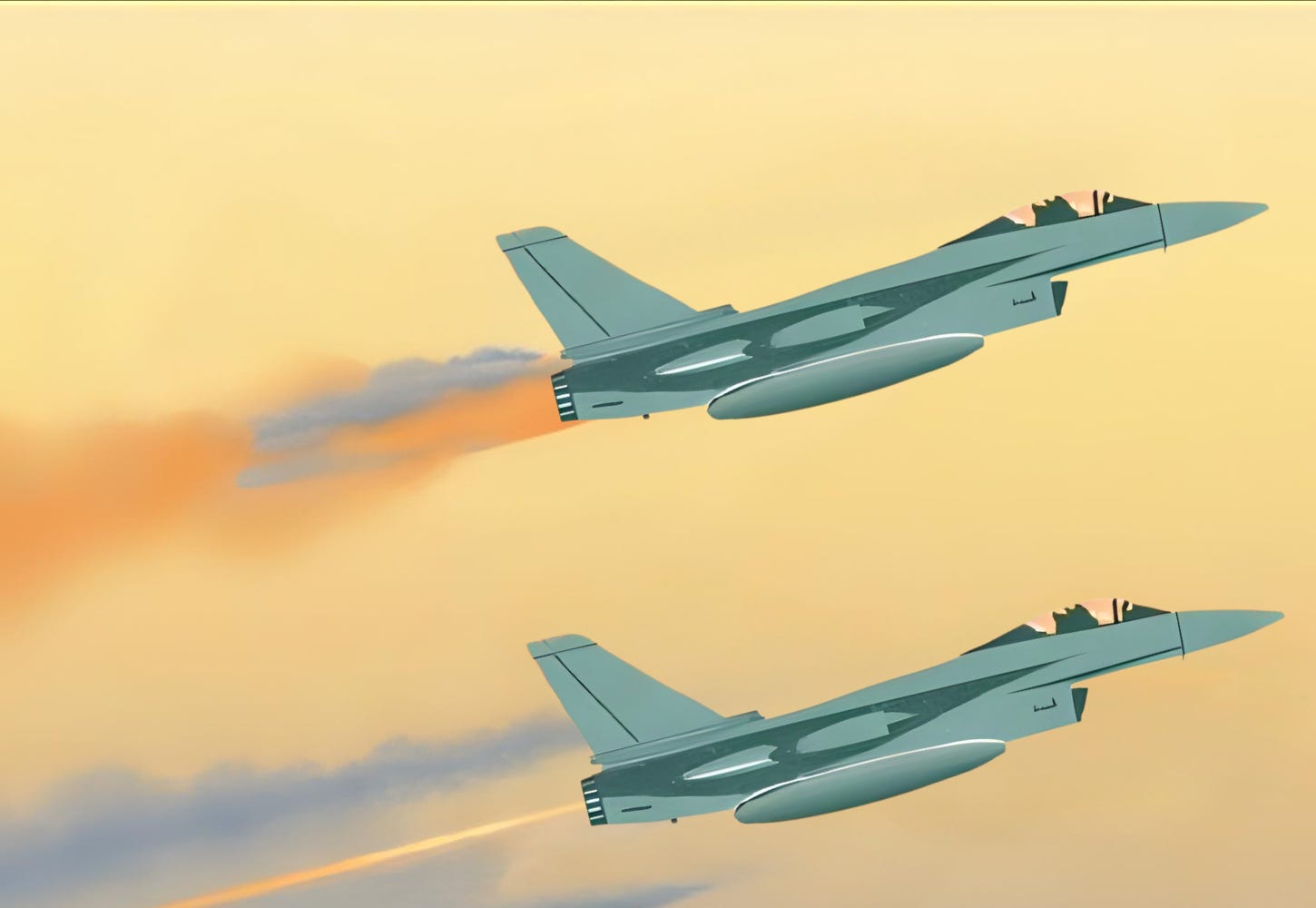
On Monday, 27th October, Sir Keir Starmer, Prime Minister, visited Turkey for bilateral talks with Recep Tayyip Erdoğan, President of Turkey. During the visit, the two leaders signed a deal worth up to £8 billion for Turkey to buy 20 Eurofighter Typhoon fighter jets from the United Kingdom (UK). The deal is the largest fighter jet export deal for Britain since Saudi Arabia purchased 72 Typhoons in 2007. This news comes as part of a concerted effort by His Majesty’s (HM) Government to secure investment from key partners in the Middle East, with Rachel Reeves, Chancellor of the Exchequer, flying to Saudi Arabia and Qatar this week to advance negotiations for a free trade agreement with the Gulf Cooperation Council (GCC), which could add £1.6 billion annually to the British economy.
Securing Foreign Direct Investment (FDI) is a critical pillar of HM Government’s policy to deliver economic growth, with the UK having joined the Comprehensive and Progressive Agreement for Trans-Pacific Partnership (CPTPP), while signing new trade agreements with the United States (US) and India since the Labour government came to power in July 2024.
Welcome back to The Cable!

On Friday, 24th October, the Prime Minister and Emmanuel Macron, President of France, co-chaired a virtual meeting of the so-called ‘coalition of the willing’, which was attended by Volodymyr Zelenskyy, President of Ukraine. The leaders attending the meeting gave their support to Donald Trump, President of the US, who recently called for the current line of contact to be the starting point for any ceasefire talks and introduced new sanctions on Russian oil and gas. They also reiterated their support for Ukraine and the need to increase economic pressure on the Russian economy, including further steps to take Russian fossil fuels off the global market. Finally, they stated their determination to put in place robust arrangements for Ukraine’s future security, so that it can deter and defend against future aggression.
Britain hosted a summit of Western Balkans countries in London on 22nd October to promote regional cooperation on issues of security and growth. The leaders of six Balkan nations met with Sir Keir, Kaja Kallas, European Union (EU) Foreign Policy Chief, Friedrich Merz, Chancellor of Germany, and diplomats from several other European nations to discuss migration, organised crime, security and economic growth in the region. During the summit, the UK announced its plan to extend its participation in the North Atlantic Treaty Organisation (NATO)-led peacekeeping force in Kosovo until the end of 2028.
NATO’s Communications and Information Agency (NCIA) has opened a £2.7 million Counter-Uncrewed Aerial Systems (C-UAS) procurement project, following a spate of airspace incursions by Russian drones into NATO nations. The notice states that the C-UAS solutions will be required to include a ‘multi-sensor suite, omnidirectional electronic and cyber countermeasures, and Command and Control integration’. These C-UAS solutions will be deployed to support a range of missions, including convoy protection, critical infrastructure protection and border protection. Alongside this, Britain is advancing its own procurement of C-UAS, with the Ministry of Defence (MOD) announcing plans to develop ‘advanced (C-UAS) capabilities from UK manufacturers’ while also enhancing drone deliveries for the Armed Forces of Ukraine.
For additional defence news stories, follow this link to the DSEI Gateway news portal.
John Healey, Secretary of State for Defence, gave the Lord Mayor’s Mansion House Defence and Security Lecture on 20th October. In his speech, he made it clear that the UK finds itself in a ‘new era of threat’, which requires a focus on ‘hard power, strong alliances and sure diplomacy’. To achieve this, the Defence Secretary outlined four key ways in which Britain was rising to the challenge: increasing defence spending; providing support for Ukraine; enhancing relations with allies and partners; and developing industrial strength in the UK while also modernising and innovating so that NATO remains ‘ahead of our adversaries.’
To commemorate the one-year anniversary of the Trinity House Agreement with Germany, Healey hosted Boris Pistorius, his German counterpart, at RAF Lossiemouth on 23rd October. The visit demonstrated the growing cooperation between Britain and Germany in the air and on the sea, with the two defence ministers joining an operational flight on one of the RAF’s Poseidon P-8A maritime patrol aircraft. The countries have also agreed to work more closely on cyber security, including introducing mechanisms to enhance data sharing, intelligence and operational tools securely with each other and NATO allies.
The Telegraph reported on the announcement by Cornish Lithium that the company has produced lithium hydroxide from Cornish granite rock at one of its mines for the first time. Lithium hydroxide is a key material in the production of battery-grade lithium. The resource was produced from a mine near St Dennis, which is on course to begin ‘full-scale production’ in 2029, producing around 10,000 tonnes of lithium hydroxide a year. Another mine near Redruth is also expected to begin production in 2027. The combined mines will be able to supply around 20% of the UK’s lithium needs, helping Britain reduce its dependence on Chinese sourced lithium – which makes up more than 60% of global supply.

How competitors frame Britain
TASS reported on comments made by Rodion Miroshnik, the Russian Foreign Ministry’s ‘ambassador-at-large for crimes of the Kyiv regime’, in which he claimed that the coalition of the willing is united ‘only by desire to continue conflict in Ukraine’, and stating that European nations wished to continue ‘pumping weapons into Ukraine’ to ‘compensate’ for the loss of American support in arming Ukraine. A typical retort from the Kremlin; the coalition has stated that it supports a ceasefire along the current battlefront, and it is Russia that refuses to come to the negotiation table.
The Embassy of the People’s Republic of China (PRC) to the UK released a statement in response to the recent publication of HM Government’s 57th Six-monthly Report on Hong Kong. A spokesperson for the Embassy said that Beijing ‘firmly opposes the UK’s fabrication of the so-called report, which…meddles in China’s internal affairs’. The statement concluded by warning Britain to ‘abandon its colonial mindset, respect facts and stop interfering in Hong Kong affairs, which are China’s internal affairs. Otherwise, it will only bring further humiliation upon itself’. Yet another example of Chinese disregard for the One Country, Two Systems agreement, which was supposed to be in place for 50 years. Britain has every right to raise concerns over Beijing’s increasingly autocratic rule over Hong Kong.

The Russian Northern Fleet’s renaissance
Despite the jibes made by Mark Rutte, Secretary General of NATO, at the expense of the Novorossiysk, a Russian Kilo class submarine, earlier this month, the Russian Navy poses a credible and growing threat to European NATO – particularly the UK, which sits directly in its line of sights down the Norwegian Sea from its main base in Murmansk.
Throughout the 1970s and 1980s, the Soviet Union built up a formidable fleet, initially the brainchild of Adm. Sergey Gorshkov. Following the collapse of the Soviet Union, the vast majority of this fleet lay in disrepair and saw little activity and little investment. Yet, this has changed fundamentally since the late 2000s, buoyed by investment made possible by lucrative Russian hydrocarbon exports.
Indeed, the naval balance between European NATO and Russia at sea is arguably the worst it has been since the 1970s, when Gorshkov’s programme caught NATO napping. Then, maritime supremacy was eventually rebuilt, in part under the leadership of John F. Lehman, Ronald Reagan’s Secretary of the Navy from 1981-1987. The post-Cold War decline of European naval power is well documented; Jeremy Stöhs, for example, has written extensively on this topic.
Even if the concerning struggles with warship readiness and personnel challenges were overcome, over half of the vessels in European navies were commissioned more than 15 years ago, and many of those which were recently commissioned are equipped for low-intensity operations (such as counter-piracy), not peer naval conflict. The fact that not a single European navy possesses a ship with Ballistic Missile Defences (BMD) is staggering.
While the US Navy brings immense capabilities to the table, there is a growing likelihood that European NATO would face the Russian fleet without American support were Washington to face a simultaneous Indo-Pacific contingency.
At the same time, Russia has undergone an impressive naval modernisation and expansion programme, though evidently not without its challenges. Moscow has 25 nuclear-powered attack submarines (SSNs) in its order of battle, with several more of the advanced Yasen class under construction. Most of its older Soviet-era boats have also received extensive refits.
Indeed, the Northern Fleet is bristling with literally hundreds of long-range strike weapons. Though Russia would face serious challenges in operating far from its Barents Sea ‘bastion’, Britain – as well as numerous vital Sea Lines of Communication (SLOCs) – is within range just a short sally from this stronghold.
For too long, NATO leadership has overlooked this Russian naval renaissance; a sentiment deepened by the initial poor performance of the Russian Black Sea Fleet against innovative Ukrainian tactics. However, these were Ukrainian tactics and Russian performance specific to that fleet in those conditions. No longer can European NATO assume it would have uncontested control of the seas in a conflict. Firm action is needed – in the words of Lehman when he initiated the Reagan-era naval buildup: ‘clear maritime superiority must be reacquired’.
If you found this Cable useful, please subscribe or pledge your support!
What do you think about this Cable? Why not leave a comment below?