

Welcome to the 58th Cable, our weekly roundup of British foreign and defence policy.
On Wednesday, 3rd September, the People’s Republic of China (PRC) will stage a large-scale military parade to mark 80 years since the end of the Second World War. However, this parade has little to do with remembrance and instead is a chance for Xi Jinping, General Secretary of the Chinese Communist Party (CCP), to demonstrate his country’s growing military prowess, technological advancement and geopolitical clout.
In Beijing this Wednesday, Xi will be joined by the leaders of Russia, Iran and North Korea – a grouping of authoritarian revisionist powers known collectively as the ‘CRINK’ – and the leaders of nations which are members of the Shanghai Cooperation Organisation (SCO). The SCO is an economic and security grouping of Eurasian nations – sometimes described as a potential rival to the North Atlantic Treaty Organisation (NATO) – which concluded its most recent summit on 1st September.
For the United Kingdom (UK) and its allies and partners, the PRC’s economic and industrial heft is one of the greatest challenges they face. Beijing’s ongoing support for its CRINK partners – in particular supplying dual-use technology for Russia’s full-scale invasion of Ukraine – is essential to their shared revisionist goals of reshaping the global international order.
For a more in-depth analysis of the parade, read the most recent Investigator by Charles Parton on Observing China, our sister site.
Welcome back to The Cable!

The Foreign, Commonwealth and Development Office (FCDO) summoned Andrey Kelin, Russian Ambassador to the UK, following Russia’s aerial strikes against Kyiv on 27th August, which killed at least 23 Ukrainian civilians and damaged the offices of the British Council and European Union (EU) Delegation. Following the summons, a spokesperson for the FCDO stated:
The UK condemns in the strongest terms these outrageous attacks…We have made clear to the Russians that such actions will only harden UK and Western resolve to support Ukraine and bring an end to this unjustified war. Russia must stop this senseless killing and destruction immediately.
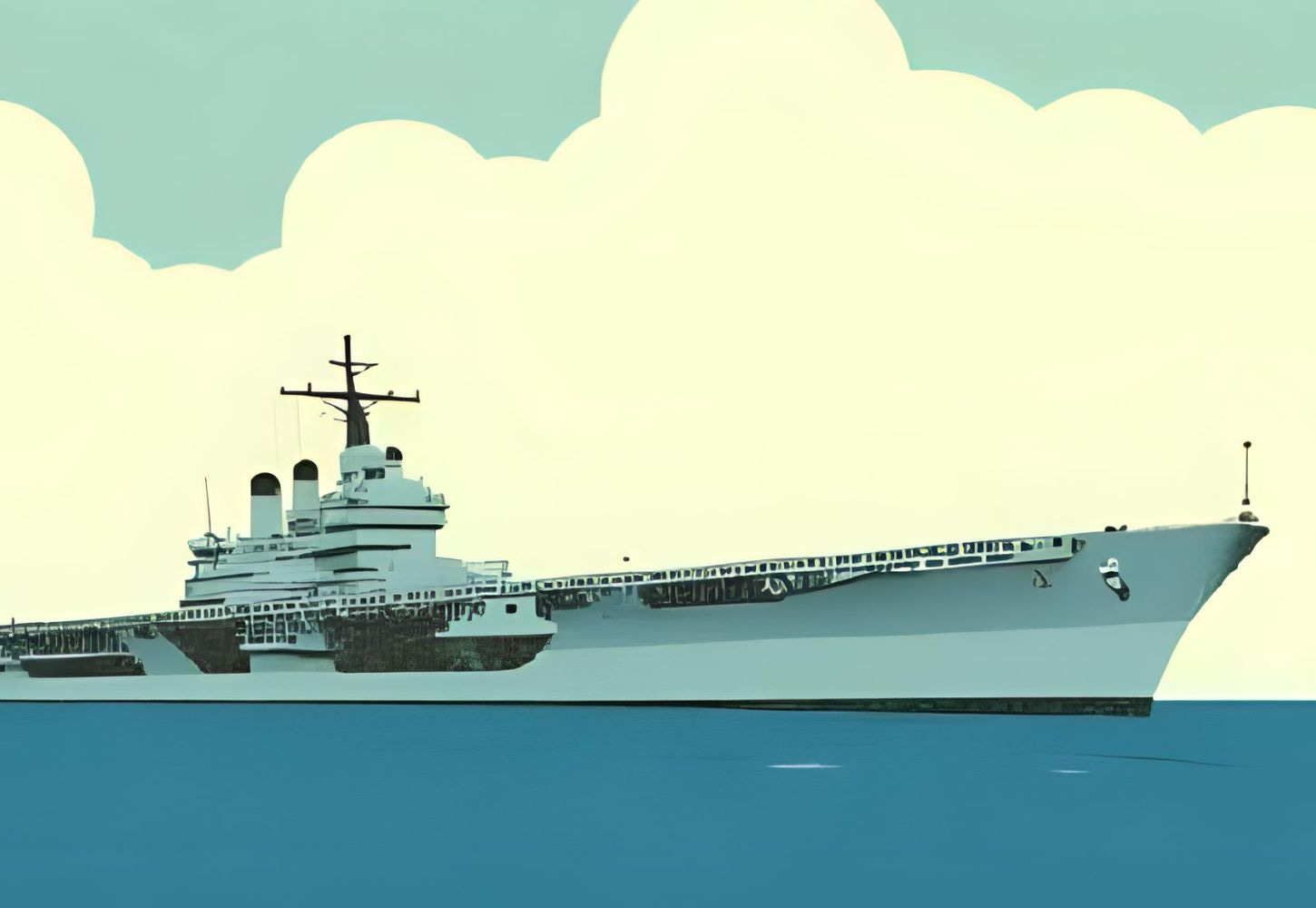
On 31st August, the Norwegian Government announced it had selected Britain’s Type 26 class frigate for the country’s armed forces. The £10 billion deal – the UK’s largest warship export deal by value – will see Britain supply at least five Type 26 class frigates to the Royal Norwegian Navy, with deliveries expected to begin in 2030. The decision comes ahead of a new UK-Norway defence agreement to strengthen Euro-Atlantic security, while also bringing the two allies’ defence industries closer together. By operating the same anti-submarine frigate, the Royal Navy and Royal Norwegian Navy will improve interoperability while reinforcing NATO’s northern flank.
On 28th August, the foreign ministers of Britain, France and Germany – the European Three (E3) – released a joint statement on the initiation of reimposing ‘snapback sanctions’ on Iran in 30 days following the Iranian regime’s ‘deliberate non-compliance’ in limiting its nuclear activities to civilian needs. These sanctions were previously lifted under the 2015 Joint Comprehensive Plan of Action (JCPOA) agreement in exchange for curbs to Iran’s nuclear programme under a United Nations (UN)-backed deal.
The Ministry of Defence (MOD) has announced its intention to pursue a new ground-launched tactical ballistic missile under the name Project NIGHTFALL. The requirement is at an open early engagement stage, with manufacturers having until 18th September to respond before a competition is launched.
For additional defence news stories, follow this link to the DSEI Gateway news portal.
On 28th August, John Healey, Secretary of State for Defence, and Nakatani Gen, Defence Minister of Japan, held a UK-Japan Defence Ministerial Meeting in Tokyo. Following the meeting, a joint statement was published in which the ministers reaffirmed their commitment to the UK-Japan Enhanced Global Strategic Partnership. They also emphasised their support for the open international order, and condemned North Korea’s weapons programmes, Russia’s full-scale invasion of Ukraine, and Beijing’s support for Russia, Iran and North Korea. Both ministers said they look forward to advancing the partnership further at the 2026 UK-hosted 2+2 meeting.
On 1st September, the MOD announced the establishment of the Cyber and Specialist Operations Command (CSOC), formed from the previous UK Strategic Command. This decision was first announced in July 2025, due to the growing importance of cyber and electronic warfare, bringing all cyber and specialist capabilities under a single command. CSOC now stands as the fourth military command, alongside the Royal Navy, British Army and Royal Air Force.
For more on the integration of Artificial Intelligence (AI) into the UK’s defence ecosystem, watch the bonus conversation from the Council on Geostrategy’s podcast Defence Talks: Securing UK Advantage here.
On 2nd September, Électricité de France (EDF) and Centrica announced that two of Britain’s oldest nuclear power plants, which they run, would have their operational life extended until March 2028. The Heysham 1 and Hartlepool plants were both due to close in 2027, but they were given a one-year extension following positive inspections of their reactors. Heysham 1 and Hartlepool both began generating electricity in 1983, and were originally slated to be retired in 2014.

How competitors frame Britain
The PRC’s Embassy to the UK responded to the joint statement from the UK-Japan Defence Ministerial Meeting, which condemned Beijing’s support for Russia’s full-scale invasion of Ukraine and expressed concerns over Chinese actions in the South and East China seas. A spokesperson from the embassy ‘firmly rejected the groundless accusations’ and ‘urged’ the UK and Japan ‘to seriously reflect on their wrongful statements’. The spokesperson called for both nations to ‘stop interfering with China’s internal affairs and to cease stirring up trouble…in the Asia-Pacific’. Absurdly, it concluded by stating that the PRC has ‘been committed to promoting peace’ in Ukraine.
In a statement, the Russian Foreign Ministry ‘strongly condemned’ the announcement that E3 countries are set to reimpose sanctions on Iran and called on the international community to ‘reject them’. The statement warned that ‘new escalation…will have grave consequences for international peace and security’. An interesting time for Moscow to raise concerns over nuclear recklessness, after years of nuclear sabre-rattling of its own – including fantasising about Britain’s nuclear decimation.

Pacific Future Forum meets in Tokyo
Last week, HMS Prince of Wales, one of the Royal Navy’s two aircraft carriers, steamed into Tokyo harbour and docked at Tokyo Cruise Terminal. It marks the first time an aircraft carrier has docked at that facility, courtesy of the Mayor of Tokyo, to symbolise the growing closeness of British-Japanese relations. In many ways, the carrier’s visit marks the apex of Operation HIGHMAST – the 2025 deployment of the Royal Navy’s Carrier Strike Group to the Indo-Pacific. Four years ago, in 2021, a British Carrier Strike Group led by HMS Queen Elizabeth was the first to venture into the region since 2009.
HMS Prince of Wales’ deployment coincided with the Atlantic and Pacific Future Forum (APFF), now an annual geopolitical gathering which switches between the Euro-Atlantic and Indo-Pacific theatres. Led by Lord Sedwill, a former National Security Adviser, and Stephen Watson, an Honorary Commodore in the Royal Navy, the conference has become one of the most prestigious of its kind anywhere in the world. It is also unique in that it is often hosted on board British aircraft carriers, whether in Portsmouth (2022), New York City (2023) or Tokyo (2025).
Convening over 350 stakeholders from politics, the civil service, the armed forces, business and research institutions, the APFF acts as a force multiplier for British narratives and influence, while acting as a forum to consult with Britain’s closest and most important allies and partners. That the forum was hosted in Tokyo this year is indicative: alongside Ukraine and Australia, Japan can now lay claim to being one of the UK’s three most important strategic partners. Indeed, both the British and Japanese defence secretaries spoke in person at the event.
Personnel from the Council on Geostrategy have participated in the APFF since 2020, though this year we were more involved. As an official partner of the APFF 2025, we hosted the first satellite event of the International Sea Power Conference – focusing on the ‘Wider North’ as a new front connecting the Euro-Atlantic and Indo-Pacific – and all three of our leadership team moderated or spoke on panels at the forum.
The APFF delivery team can be congratulated for delivering a fascinating and challenging conference. We look forward to the 2026 iteration, where plans are afoot to host it in the United States to mark the 250th anniversary of the American declaration of independence. Next stop, Boston?
For more information about the APFF, click here.
If you found this Cable useful, please subscribe or pledge your support!
What do you think about this Cable? Why not leave a comment below?
Russia has National Nuclear Defence Strategy (http://www.kremlin.ru/acts/bank/51312) and it hasn't any "fantasy about Britain’s nuclear decimation". It's your own fantasizing, lying and propaganda narratives.