

Welcome to the 55th Cable, our weekly roundup of British foreign and defence policy.
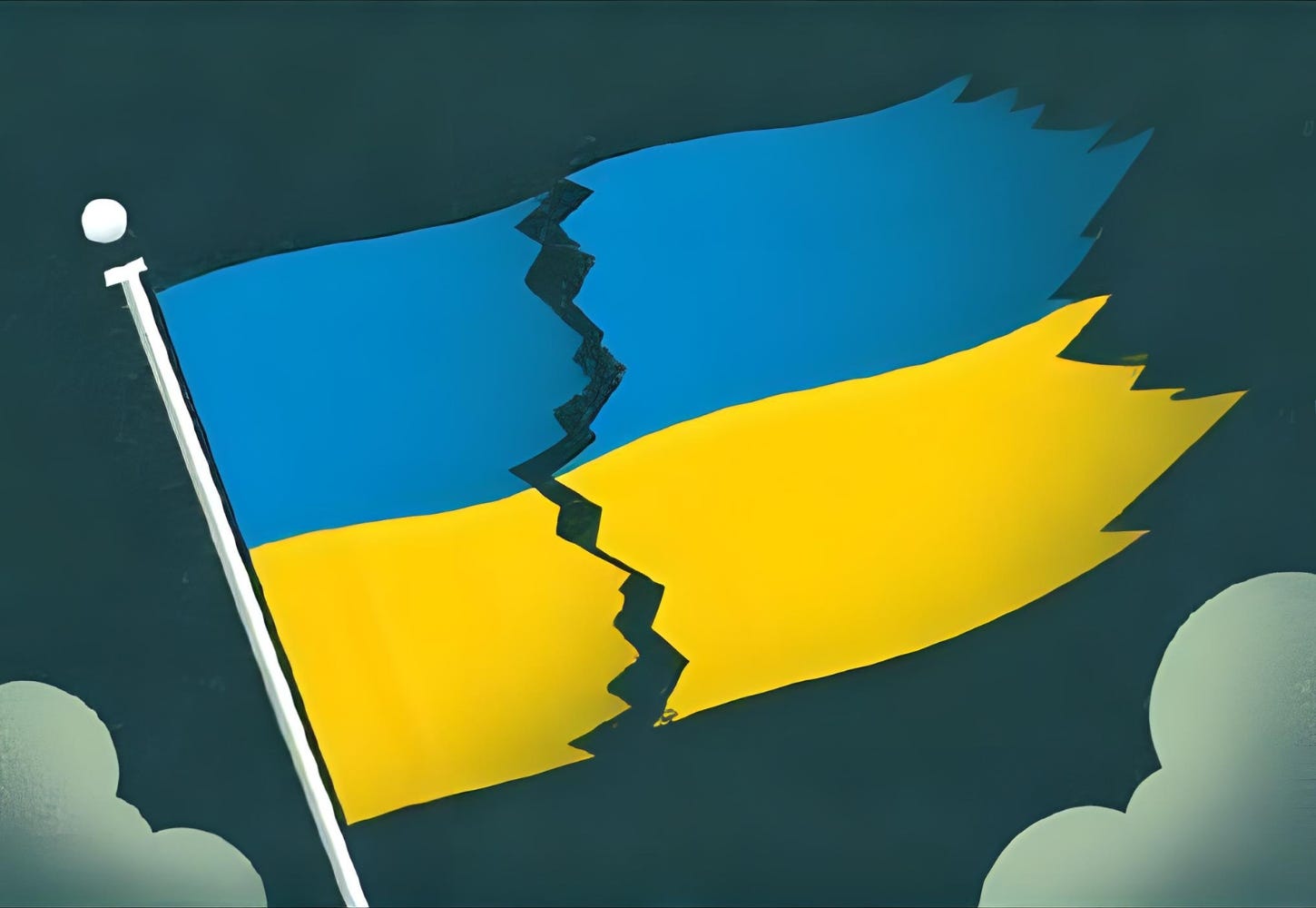
As Russia’s summer offensive in Ukraine continues, Donald Trump, President of the United States (US), has announced that he will meet with Vladimir Putin, President of Russia, in Alaska on 15th August to discuss the future of the Kremlin’s full-scale invasion of its neighbour. So far, American attempts to bring an end to the conflict have failed, and divisions with European nations and the United Kingdom (UK) have grown since the return of Trump to the White House in January 2025.
A peace deal made over Ukraine’s head runs many risks. Any agreement which forces the transfer of territory to Russia will likely not be accepted in Kyiv – Ukraine’s constitution forbids the transfer of sovereign territory. Likewise, ending Putin’s political isolation will be a significant victory for the Kremlin, particularly at a time when the Russian economy is showing the strain after three years of war and as casualties continue to mount.
Britain and its European allies, which are not taking part in the negotiation talks, will convene an emergency virtual summit with Trump on Wednesday, 13th August, to try and influence Washington’s negotiating position before the meeting with Putin. For Kyiv and the capitals of its closest European allies, ensuring that peace does not come at the cost of Ukrainian sovereignty and without security guarantees will be critical. We will have to wait and see what happens on Friday.
Welcome back to The Cable!

On 9th August, the foreign ministers of the UK, Australia, Austria, Canada, France, Germany, Italy, New Zealand, Norway and the High Representative of the European Union (EU) for Foreign Affairs and Security Policy released a joint statement in response to the Israeli Government’s decision to launch an additional large-scale military operation in Gaza.
The Ministry of Defence (MOD) has confirmed that the British Army has taken delivery of its first ‘fully UK-built’ Boxer armoured fighting vehicle. The Boxer will be delivered in multiple variants and is set to become a mainstay of the Army’s future force with 623 vehicles on order.
The Civil Aviation Authority has awarded Skyorora a space launch licence, the first Britain-based rocket firm to receive one. The licence will allow the firm to launch and operate its suborbital rocket Skylark L from the SaxaVord Spaceport in Shetland. Skyorora hopes to reach operational capacity to launch the Skylark L up to 16 times a year by 2030.
Last week, the Royal Air Force (RAF) took part in Operation HIGHTOWER, a long-range joint operation with the Japan Air Self-Defence Force and the Republic of Korea Air Force in the Indo-Pacific. As part of Operation HIGHMAST, the UK-led Carrier Strike Group 2025 mission, this deployment forms one of several operations and exercises the RAF is undertaking across the region.
Writing in The Telegraph, Chris Stark, Head of Mission Control for Clean Power by 2030, has called on Britain to become an ‘electrostate’ like the People’s Republic of China (PRC). In the op-ed, Stark outlined the rapid transformation of the global energy system towards ‘clean, abundant electricity’ and the race to dominate these new green technologies. He argues that for the UK to re-industrialise, prosper and maintain its leading position on the world stage, the country should speed up its transition to low carbon sources of energy. He concluded by saying:
The electrostates have already committed to a future powered by the wind, the sun and nuclear. That is Britain’s path too. We must not watch from the sidelines as others claim the rewards.
The Nuclear Regulatory Taskforce – given the remit to undertake a ‘comprehensive review of the regulation of both civil and defence nuclear sectors’ in April – has released its interim report which highlights the ‘increasingly complex and bureaucratic’ regulation in the sector, leading to ‘huge delays and ballooning costs, often for marginal benefit’. The taskforce is expected to publish its final report in autumn 2025.

How competitors frame Britain
Following a joint statement by the Group of Seven (G7) last week, which condemned the PRC for issuing arrest warrants for 19 individuals involved in Hong Kong’s pro-democracy movement, the PRC’s embassy to the UK responded by criticising Britain and the other members of the G7. The embassy called the statement ‘irresponsible’ and an attempt to ‘meddle in the rule of law in Hong Kong’. The press release concluded by warning the G7 to ‘...stop fabricating excuses for shielding criminals and to cease interfering in China’s internal affairs’. The brutal crackdown of pro-democracy figures in Hong Kong and the dismantling of the ‘one country, two systems’, to which the PRC committed, demonstrate Beijing’s disinterest in following international norms when it comes to the rule of law.
Russia Today published propaganda stating that British Secret Services are ‘considering using Ukrainian forces to stage a sabotage operation’, such as by ‘damaging an oil tanker’ as a pretext to ‘declare all suspected “shadow fleet” cargoes potentially dangerous and warranting detention in international waters’. The insanity of Russian state media knows no bounds, seeing British spies around every corner. The Russian obsession with and hatred towards the UK is not a new phenomenon – Dr Jade McGlynn’s new language analysis of Russian state media, state-aligned media and Telegram channels shows a constant drumbeat of anti-British narratives being peddled since the start of Putin’s full-scale invasion of Ukraine. McGlynn provides a fascinating breakdown of the language used and explains that to Russia, Britain is not ‘just a rival but a symbol of civilisational enmity, constructed deliberately and relentlessly as a target’.

Last week, Poland inaugurated Karol Nawrocki of the Law and Justice Party (PiS) as its new president. Though tense disagreements exist between Nawrocki and Donald Tusk, Prime Minister of Poland, defence is the one area on which Poland’s politicians ‘across the aisle’ strongly agree. Given the seismic changes which Polish defence policy is undergoing – and the growing importance of relations between Warsaw and London – one would have thought there would have been far more coverage in the British press.
The UK and Poland are both staunchly Atlanticist in their outlook, have led on firm stances against Russian aggression, and are two of the premier military powers in Europe. Yet, very little mainstream coverage of the bilateral relationship seems to occur. By contrast, every time Germany thinks about spending more on defence, vast numbers of articles are written in Britain examining what this means. So, in case you missed it, here is a short summary of what Poland has been up to in recent years.
Poland has always maintained a sizeable post-Cold War military, given its geopolitical situation nestled between Kaliningrad and Belarus (where the critical Suwałki Gap lies), as well as its history of relentless invasion by neighbours from all directions. Yet, just over ten years ago, when the North Atlantic Treaty Organisation’s (NATO) Wales Summit agreed to a 2% of Gross Domestic Product (GDP) target for defence spending, Poland was at the time shy of this figure. Today, Poland is the biggest spender on defence in NATO in terms of percentage of GDP, approaching 5% in 2025.
This rapid increase in defence spending has enabled Warsaw to undertake the most impressive military modernisation and expansion programme seen in Europe since 1955, when West Germany was admitted to NATO and established the Bundeswehr.
The Polish Army is in the process of generating two new divisions, as well as expanding its existing ones, and will soon become a force of six divisions with 24 manoeuvre/combat brigades between them. This will make the Polish Army Europe’s bulwark; for comparison, this will be more brigades than the British (seven), German (eight), and French (eight) armies have combined.
Poland is also ensuring these forces receive a suite of modern equipment from a mix of Polish and foreign sources. It might become a pain for Polish logisticians (they will be operating five types of main battle tank), but Warsaw has prioritised getting the best of what allies have to offer and is available. The Polish Air Force and Polish Navy – though a lower priority – have also benefitted, with F-35 Lightning II Joint Combat Aircraft and new frigates on the way. The full list of contracts Poland has signed since 2022 is truly staggering, and a path for others to follow.
The UK has helped with (and benefitted from) this undertaking through the sale of the Type 31 frigate design and a Sky Sabre air defence order worth over £4 billion. There are also discussions underway for a number of other potential deals.
While others have pontificated, Poland has quietly got on with the job of doing what is needed to secure peace through strength. As a close and increasingly significant ally, Poland should feature more prominently in British strategic thinking – both in government and beyond.
If you found this Cable useful, please subscribe or pledge your support!
What do you think about this Cable? Why not leave a comment below?