

Welcome to the 53rd Cable, our weekly roundup of British foreign and defence policy.
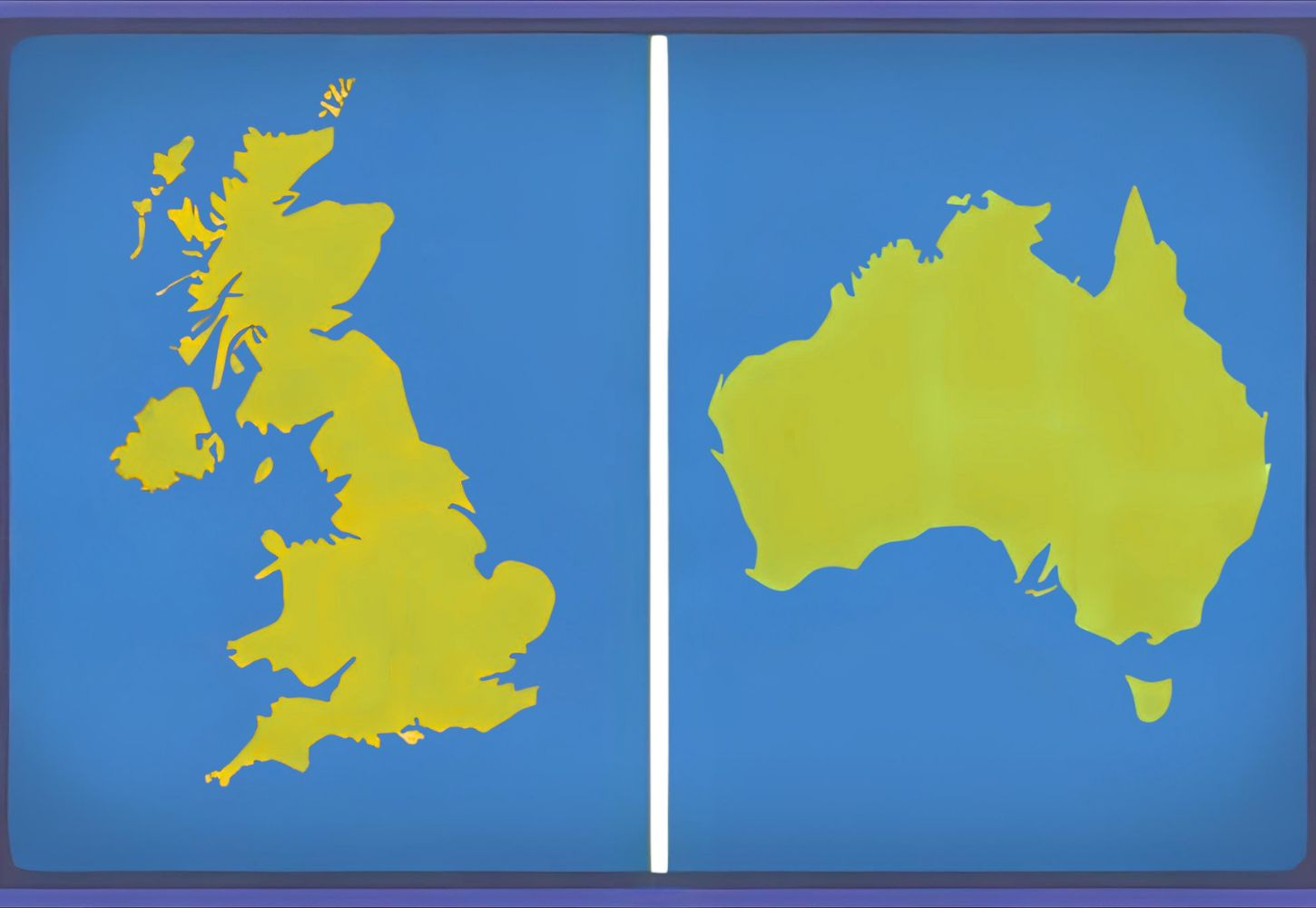
In recent weeks, His Majesty’s (HM) Government’s diplomatic efforts have been focused on Euro-Atlantic security, signing new treaties between the United Kingdom (UK) and both France and Germany. Now the focus has moved to the Indo-Pacific, with John Healey, Secretary of State for Defence, and David Lammy, Foreign Minister, flying to Australia for the annual AUKMIN talks and to sign a new 50-year AUKUS treaty – the Geelong Treaty – with their Australian counterparts. This new treaty is focused on bilateral defence, economic growth and industrial cooperation, with Lammy stating:
Our new bilateral AUKUS treaty is an embodiment of that – safeguarding a free and open Indo-Pacific whilst catalysing growth for both our countries.
Following the talks in Sydney, Lammy and Healey travelled to Darwin to visit the UK-led Carrier Strike Group 2025 (CSG2025) as it docks in the Northern Territory while taking part in Operation TALISMAN SABRE. While aboard HMS Prince of Wales in Darwin, Healey stated that Britain and its allies would be prepared to fight and deter potential adversaries in the Indo-Pacific.
Welcome back to The Cable!

Sir Keir Starmer, Prime Minister, spoke with a number of world leaders in the last week, including:
On 22nd July, the Prime Minister spoke to Recep Tayyip Erdoğan, President of Turkey. The two leaders discussed the Memorandum of Understanding (MOU) signed by their respective defence ministers for a ‘multi-billion pound export deal’ of UK-built Typhoon fighter jets to Turkey (see more below). They also spoke about the humanitarian crisis in the Middle East and underlined the ‘urgent need for more aid and an urgent ceasefire’, reiterating their support for a two-state solution regarding Israel and Palestine. As well as this, the pair discussed the recent violence in Syria and Turkey’s role in the peace talks between Ukraine and Russia in Istanbul.
On 24th July, Sir Keir hosted Narendra Modi, Prime Minister of India, at Chequers to celebrate the UK-India Free Trade Agreement, which was signed earlier that day. The deal will see Indian tariffs lowered, providing improved access for British businesses to one of the fastest-growing economies in the world. The two prime ministers also discussed the importance of the UK-India Comprehensive Strategic Partnership, which will see closer collaboration on trade, defence, security, technology and education.
Sir Keir met with Donald Trump, President of the United States (US), over the weekend in Scotland. They discussed the implementation of the Economic Prosperity Deal and diplomatic efforts to bring about a ceasefire in Gaza. Additionally, the two leaders discussed bringing Russia’s full-scale invasion of Ukraine to an end, the 50-day drive to arm Ukraine and force Moscow to the negotiating table. This meeting will be followed up with a state visit by Trump to the UK in September.
Healey met with Yaşar Güler, his Turkish counterpart, in Istanbul to sign an MOU over a potential export deal of Typhoon fighter jets to Turkey. Negotiations on the potential deal will continue over the coming weeks. It would be the first export order Britain has secured for the Typhoon since 2017. While in Istanbul, the two defence ministers also discussed bilateral relations and reaffirmed the importance of the two countries’ longstanding defence cooperation, including collaboration through the North Atlantic Treaty Organisation (NATO) and growing ties in defence industries and security.
The Royal Navy has conducted a trial to demonstrate the launch and recovery of an uncrewed underwater vehicle (UUV) from a submarine. According to the Royal Navy, the torpedo tube-launched UUV will ‘increase the capability options for UK nuclear-powered attack submarines and support underwater reconnaissance, underwater communications and seabed warfare missions’. The Submarine Delivery Agency’s Autonomy Unit delivered the trial in partnership with L3Harris.
Major General Paul Tedman, Commander of UK Space Command, gave a speech at the Royal United Services Institute (RUSI) on defence in the space domain. He outlined the importance of space in global affairs, stating that the global space economy will be worth more than US$1 trillion (£744 billion) by 2035, while nearly 20% of the UK economy is ‘underpinned by space-based services’. Tedman went on to state that space-based threats are growing, and that HM Government has recognised the problem with the recent Strategic Defence Review elevating space to ‘parity with the traditional domains – recognising it as the keystone of modern, multi-domain operations’. Finally, the Major General laid out three key priorities for British space defence: space control, decision advantage, and space-based Intelligence, Surveillance and Reconnaissance (ISR) ‘to globally see and target with precision.’
HM Government has confirmed that ten projects from the first phase of its flagship hydrogen programme – Hydrogen Allocation Round 1 (HAR1) – have begun construction. These projects will be the UK’s first commercial-scale green hydrogen projects and will support the British industrial sector’s transition from using fossil fuels towards domestically produced low-carbon hydrogen, reducing emissions from heavy industries such as steel, glass and heavy transport.
While visiting Cornwall this week, Rachel Reeves, Chancellor of the Exchequer, confirmed that HM Government will invest £28.6 million to help finance the re-opening of the South Crofty tin mine in the county. The mine was closed in 1998, bringing an end to the UK’s tin mining industry. The move to restart tin mining comes as demand for the metal has increased substantially in recent years, due to its use in renewable energy infrastructure, energy storage and consumer electronics.

How competitors frame Britain
Russia Today reported on an interview with Nikolai Patrushev, senior Aide to Vladimir Putin, President of Russia, in which he stated that Britain ‘would not hesitate to sabotage a potential thaw in US-Russia relations’, which could entail a so-called ‘false flag’ attack against American assets. Complete delusions from the Russian state; further evidence of the alternate reality of paranoia the Kremlin exists in.
Russia Today also released propaganda disparaging the recent Kensington Treaty between Britain and Germany, and Western Europe’s lack of geopolitical credibility. Stating that ‘only a complete imbecile would trust the British as allies’, the article attacks the treaty as ‘the latest act in this tragicomic performance’ of European nations in response to Russia’s full-scale invasion of Ukraine. While it is true that European countries need to rearm and support Kyiv more forcefully, the picture painted by Russian state media reflects little of the true reality.

Geopolitical circumstances and events have drawn the UK and Australia closer together in the last half-decade through encouraging the greater institutionalisation of defence ties and harmonisation of strategic thinking. The signing of the 50-year Geelong Treaty – which will ‘...enable comprehensive cooperation on the design, build, operation, sustainment, and disposal of our SSN-AUKUS submarines’ – after last week’s AUKMIN consultations is another step in this direction, illuminating and entrenching foreign policy trends unique to the UK and Australia, as well as the way these two old allies see their modern defence relationship.
The Geelong Treaty raises the currency of Britain as a non-native country contributing to Indo-Pacific ‘security and stability’. Although primarily focused on bilateral matters, it addresses necessary hurdles impeding HM Government’s desires in the region, from allocating further defence resources through AUKUS to tackling challenges shared by Indo-Pacific countries such as coercive action by the Chinese Coast Guard – the first non-British or Australian entity mentioned in the statement.
The treaty simultaneously continues the trend of HM Government positioning the UK as a bankable economic and defence industry partner in the region. Indeed, the ongoing CSG2025 deployment was pitched mainly as an opportunity to ‘...promote British trade and industry’ compared to the focus on great power conflict and subsequent posturing which characterised the Indo-Pacific approach of Boris Johnson and Liz Truss, former prime ministers. This theme appeared much more frequently in this year’s AUKMIN statement than previously, with ‘industry’ entering the document independently for the first time.
On the Australian side, the treaty demonstrates Canberra’s continued desire and ability to employ the ‘Australian straddle’ in how it manages international affairs. Only two weeks before Richard Marles, Australian Defence Minister, was jovially sharing a pint with John Healey, his British counterpart, and signing this long-term defence acquisition treaty – which falls under an agreement broadly concerned with the People’s Republic of China – Anthony Albanese, Australian Prime Minister, was in Beijing discussing economic opportunities and having a private lunch with Xi Jinping, General Secretary of the Chinese Communist Party. This approach indeed has trade-offs and is far from perfect, but is designed to grant Australia malleability when required.
An ability to bend is becoming even more important as the US – the most important defence partner to both the UK and Australia – continues to descend into unpredictability.
Considering the brash nature of the Trump administration’s foreign and defence policy thus far, the treaty is evidence of the UK and Australia taking the reins of AUKUS themselves, working bilaterally under the trilateral arrangement to ensure momentum continues where US involvement is minimal or not necessary; a trend which can be expected to continue.
The 2025 AUKMIN statement was also the longest so far, and had an emphasis on ‘rules’, ‘norms’ and multilateralism not seen since Albanese came to power. This can be read as an attempt to seize on the vacancy being left by the US in the normative or ideational realm of Indo-Pacific geopolitics. It may also put Britain and Australia on firmer ground when approaching the US about any future complications with AUKUS. There is likely to be greater harmonisation of language between the UK and Australia, alongside shared emphasis on what they believe undergirds the ‘security and stability’ of the Indo-Pacific.
Finally, expect both countries to edge closer to becoming formal treaty allies – behaving as such while remaining not so. A status of forces agreement and commitment to consult through the Five Power Defence Arrangements and updated UK-Australia Agreement for Defence and Security Cooperation are the current pillars of the defence relationship, culminating in what has been described as a customary alliance even moving towards de facto status.
The two nations will likely remain in this grey area of alliance politics while finding other, less direct ways to deepen the defence and security relationship, such as the Geelong Treaty.
If you found this Cable useful, please subscribe or pledge your support!
What do you think about this Cable? Why not leave a comment below?
