

Welcome to the 52nd Cable, our weekly roundup of British foreign and defence policy.
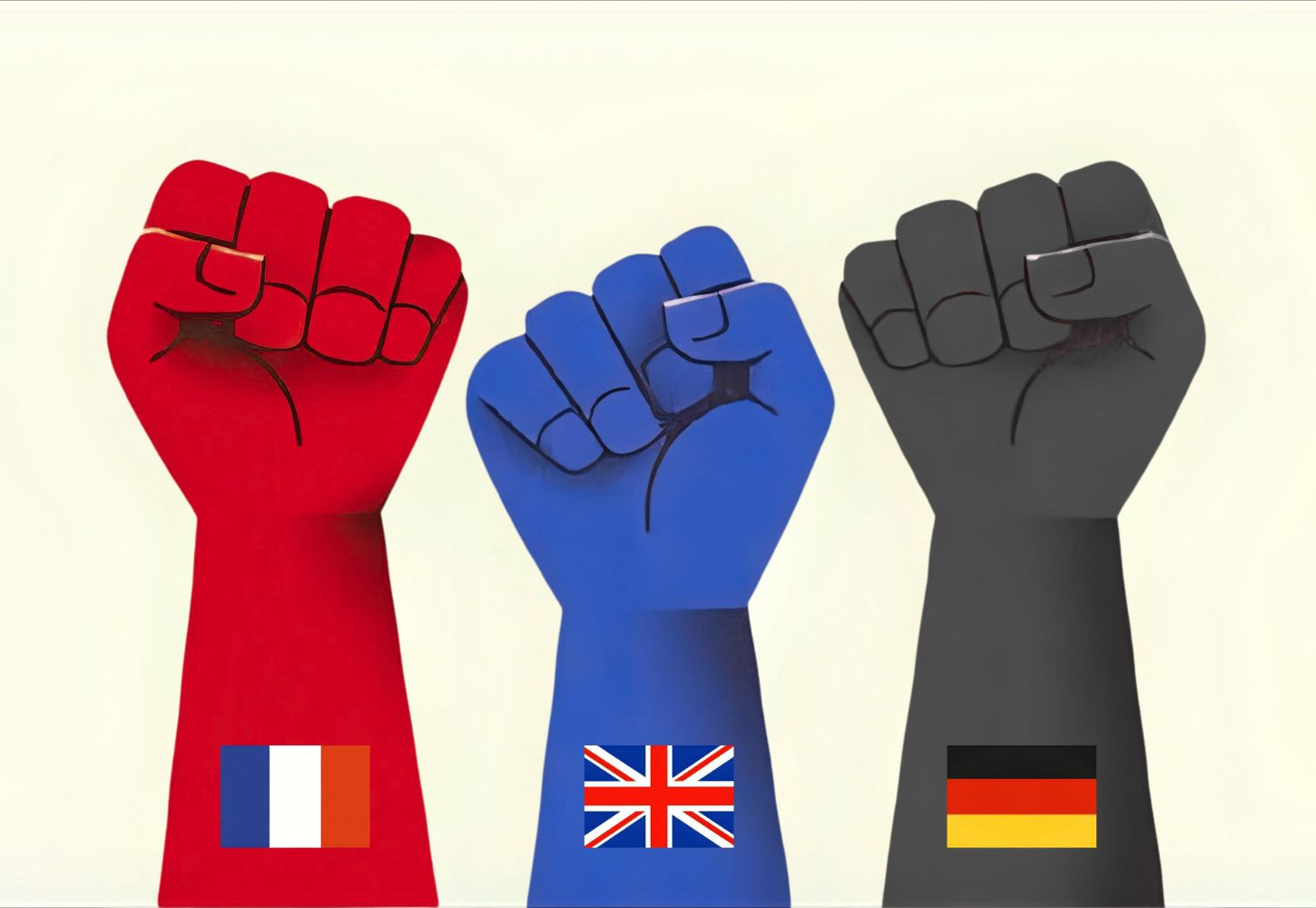
Last week, Friedrich Merz, Chancellor of Germany, made his first official visit to the United Kingdom (UK), to meet with Sir Keir Starmer, Prime Minister, and sign the Kensington Treaty, a new bilateral agreement which builds upon last year’s Trinity House Agreement between the two largest economies in Europe. This agreement is focused on defence cooperation, economic growth and tackling illegal immigration, and marks the first major bilateral agreement for Germany since the Elysée Treaty with France in 1963. For His Majesty’s (HM) Government, this agreement can be seen as part of the broader ‘reset’ with the European Union (EU), and alongside last week’s state visit from Emmanuel Macron, President of France, as part of a strategic plan to enhance relations between Britain, France and Germany. In a press conference following the signing of the Kensington Treaty, Sir Keir said:
We see the scale of the challenges our continent faces today and we intend to meet them head on. But we also see the scale of the opportunities. So, we have a shared resolve to shape this new era with new leadership.
In this era of geopolitical instability, deeper cooperation on defence between the largest powers of Europe is welcome, but current agreements leave much still to be desired.
Welcome back to The Cable!

On 21st July, John Healey, Secretary of State for Defence, called for a ‘50-day drive’ to arm Ukraine while virtually chairing a meeting of the Ukraine Defence Contact Group (UDCG). This call follows Donald Trump, President of the United States (US), declaring a 50-day deadline for Moscow to agree to a peace deal or face ‘crippling economic sanctions’.
Following the lifting of a super-injunction on 15th July, the Ministry of Defence (MOD) is facing a scandal over the accidental data breach of the personal information of thousands of Afghans who had applied to the Afghan Relocations and Assistance Policy (ARAP) scheme. As many as 100,000 Afghans were put at risk by this leak, resulting in a covert resettlement programme which might end up costing the UK taxpayer £7 billion.
The UK and EU are set to lower the crude oil price cap on Russian oil on 2nd September 2025. The move, which will drop the cap from US$60 (£44.50) a barrel down to US$47.60 (£35.25), will place further pressure on Moscow’s economy, which relies heavily on fossil fuel exports. Speaking at the Group of 20 (G20) meeting in South Africa, Rachel Reeves, Chancellor of the Exchequer, stated:
This decisive step to lower the crude oil price cap will target Russia’s oil revenues and ramp up the pressure on [Vladimir] Putin by exploiting his biggest vulnerability – while keeping energy markets stable.
On 21st July, HM Government also enacted sanctions against 137 Russian targets, focused on Moscow’s shadow fleet, responsible for illicitly transporting £17.8 billion worth of cargo since the beginning of last year.
The British soldiers deployed on the North Atlantic Treaty Organisation’s (NATO) eastern flank have showcased a new digital targeting web, called ASGARD. This new system will exploit Artificial Intelligence (AI) and novel communications networks, providing rapid targeting and decision support to personnel. ASGARD forms part of the work to create a wider digital targeting web across the UK’s Armed Forces by 2027, backed by more than £1 billion in funding.
Luke Pollard, Minister for the Armed Forces, gave a speech at the Global Air & Space Chiefs Conference 2025 on 17th July, in which he stated that the Strategic Defence Review ‘…set out our blueprint to reshape and revitalise UK defence in a new geopolitical era of threat.’ Pollard emphasised the rapid technological transformation Britain is currently experiencing, especially in the air domain:
The story of air power has always been one of constant innovation, imagination and adaptation. That has not changed today…Innovation, speed and agility, the ability to out-think, out-perform and out-manoeuvre the enemy, are the capabilities and challenges we must harness.
He went on to mention several key programmes for the Royal Air Force (RAF), including the Global Combat Aircraft Programme (GCAP), the purchase of F-35A Lightning II Joint Combat Aircraft – coupled with a commitment to join NATO’s nuclear Dual Capable Aircraft Mission – and bringing automation to the forefront of the RAF.
The Royal Navy has formally retired HMS Triumph, the last Trafalgar class nuclear attack submarine (SSN), ending more than four decades of active service by the class. The Trafalgar class is being replaced by the Astute class, with the final two of these boats expected to join the Royal Navy by 2029.
HM Government has announced that the UK will be the first country in the world to develop fusion-specific planning rules. The plans will see fusion introduced into the Nationally Significant Infrastructure Project regime, putting fusion energy projects on the same footing as other clean energy technologies, such as solar, onshore wind and nuclear. This announcement follows a commitment in the Spending Review to invest over £2.5 billion in fusion research and development, including financial support for the STEP programme (Spherical Tokamak for Energy Production) which aims to develop and build a ‘world-leading’ fusion power plant by 2040 in Nottinghamshire.
HM Government has announced plans to cut electricity network costs for energy-intensive industries from 60% to 90%. Around 500 British firms, including British Steel and INEOS, are set to save up to £420 million a year when the cuts come into effect next year. The cost of electricity for these companies will fall by around £7 per megawatt hour (MW/h), bringing the industrial price of energy in line with other European countries such as France and Germany. The UK has suffered from the highest industrial prices for electricity for years, which has impacted the country’s manufacturing sector.

How competitors frame Britain
Russia Today released propaganda last week claiming that the Foreign, Commonwealth and Development Office (FCDO) has been covertly paying ‘...dozens of foreign YouTube influencers to promote messages aligned with British foreign policy’. The article goes on to state that this is in fact an attempt to disseminate anti-Russian narratives. The piece concludes that this ‘meddling’ by the FCDO undermines ‘genuine democratic discourse’ and ‘hollows out’ democracies’ ‘moral authority’. A somewhat incredulous attack from Russian state media, considering its decades-long campaign to spread Kremlin talking points both in the UK and across the globe.
The People’s Daily published an article following the visit of Jonathan Powell, National Security Adviser to the Prime Minister, to Beijing last week for talks with Wang Yi, Foreign Minister of the People’s Republic of China (PRC). In the article, Wang stated that:
China is willing to enhance strategic communication and expand strategic cooperation with Britain…inject new momentum into bilateral relations and jointly promote world peace, stability and prosperity.
However, warmer bilateral relations between London and Beijing will only be achievable if the PRC begins to act as a responsible player on the world stage.

Since being elected to office in mid-2024, the Labour government has attempted to ‘reset’ relations with France and Germany. In this objective, it has had some success: London has signed new defence and security treaties with Berlin and Paris, which together account for well over half of the European Union’s total economic output.
It is true that British-French and British-German relations deteriorated under the previous Conservative government, but this was as much because of the French and German reaction to Brexit than anything which the UK did to unsettle them. For this reason, the previous government prioritised relations with the ‘fringe’ of Europe, i.e., the countries of the Nordic and Baltic regions, as well as Poland, Romania and Italy. It also looked more to Ukraine long before Russia renewed its war of aggression against the country. In Whitehall, this strategy was called the ‘outside-in’ approach.
In prioritising relations with Berlin and Paris, the Labour government appears to have restored the more traditional British ‘inside-out’ strategy. True, it signed a new defence agreement with Romania in November 2024 and reestablished the Belvedere Forum with Poland in June 2025 after a two-year hiatus. The UK has also pushed ahead with the GCAP with Italy (and Japan), and plans to sign a sweeping new defence and security treaty – similar to the Lancaster House and Trinity House agreements – with Warsaw later this year.
Yet, in comparison to the fanfare surrounding improvements in the British-French and British-German relationships, narratives surrounding the deepening of the British-Polish and British-Romanian relationships sound quieter and more restrained. This should change. The reason is simple: over the past few years, the ‘fringe of Europe’ has become the continent’s new front and centre. Any comforting illusion – which continues to linger in London – that European affairs can be directed by a triumvirate of Britain, France and Germany should be rethought.
In other words, resetting relations with France and Germany should not be seen as an end in itself, but part of a broader and lasting reappraisal of the UK’s European interests. Unlike its predecessor, the new government in London holds in its hands the capacity to centralise Britain in the new Europe. But this requires a progressive and ambitious strategy which balances established relations with new realities.
If you found this Cable useful, please subscribe or pledge your support!
What do you think about this Cable? Why not leave a comment below?