

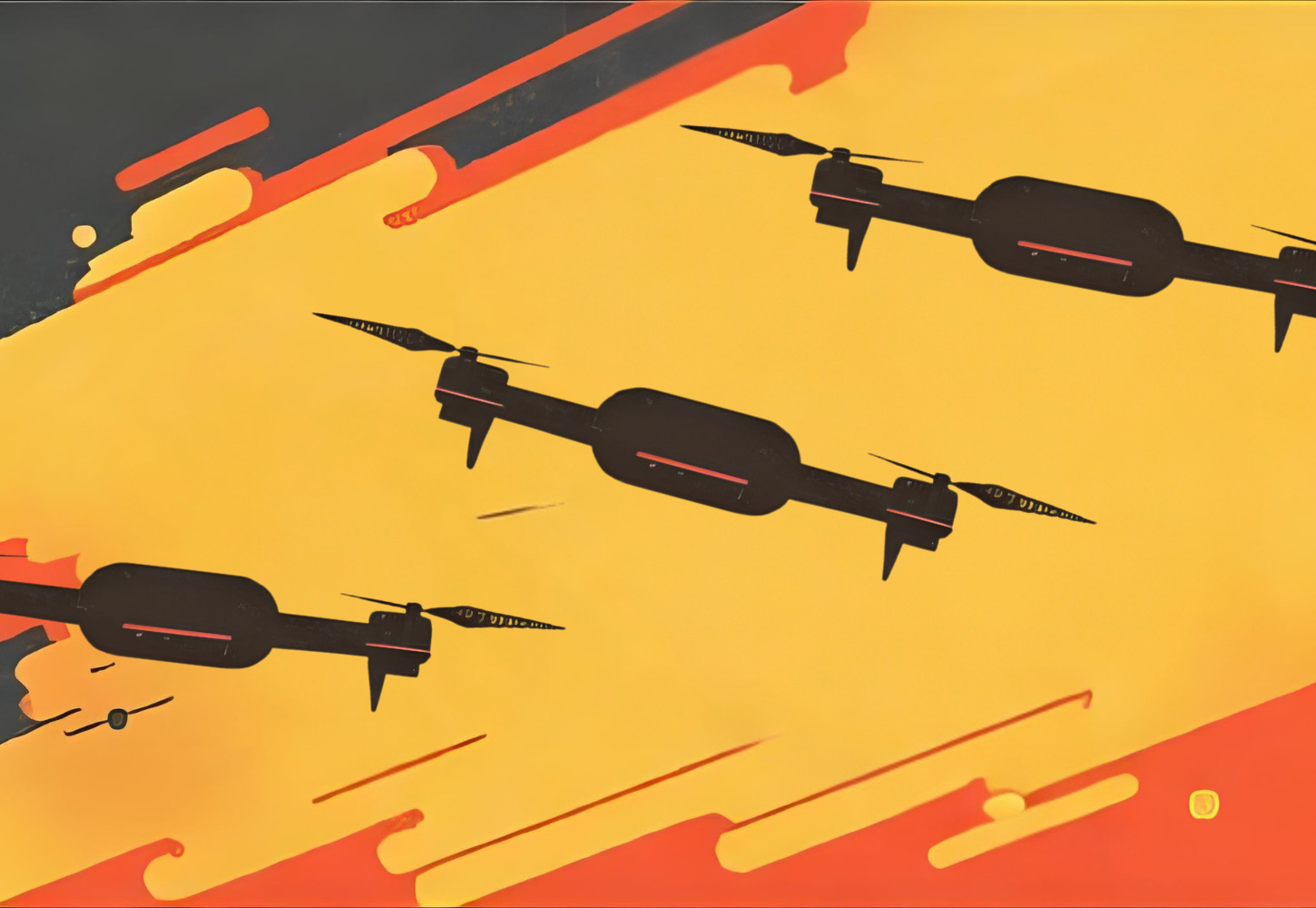
On Wednesday, 10th September, several Russian drones were shot down over Polish territory. Demonstrating a flagrant disregard for the country’s territorial integrity and sovereignty, the drones flew over 600 kilometres (km) into Polish airspace, and were shot down as far as Olesno, 400km from Poland’s border with Ukraine. Polish authorities stated that up to 15 drones were found by Wednesday evening.
While Russia and its ally Belarus denied any deliberate wrongdoing in the aerial incursion, Poland has invoked the North Atlantic Treaty Organisation’s (NATO) Article Four in response to the drones, requesting the alliance’s members hold a formal discussion on the threat to their collective national security. As such, for this week’s Big Ask, we asked six experts: In light of the Russian incursion into Polish airspace, how should Britain respond?
Senior Research Fellow, Polish Institute of International Affairs, and Senior Lecturer, Warsaw School of Economics (SGH)
The Russian drone incursion on the night of 9th-10th September had an unprecedented character, both in terms of scale and intent. The incursion not only involved numerous Uncrewed Aerial Vessels (UAVs), which practically excludes any ‘accidental’ character of the event, but some of them headed towards critical infrastructure, including deep inside Poland (e.g., towards a fighter jet base in the north of the country).
The incursion needs to be seen as a direct challenge to NATO, and a probe into the alliance’s capabilities on the eve of Zapad 2025 – the key Russian-Belarusian military exercises. NATO’s initial response was a military and political success, as three drones classified as directly threatening military or civilian infrastructure were shot down in the action, and involved close cooperation of Polish, Dutch and Italian air assets, as well as German ground-based radars.
Where the United Kingdom (UK) is concerned, three parallel lines of action are necessary. First, it is crucial to exert pressure on all NATO allies to recognise the seriousness of the situation, including the United States (US).
Second, Britain should send already-pledged reinforcements to Poland and Estonia. It is also crucial to increase numbers of air defence assets in the near future in anticipation of their more intense use, starting with improving serviceability rates of the ones currently in operation.
Thirdly, it would be advisable to cooperate with Poland and other NATO countries in building up anti-drone defences on the basis of Ukrainian experience, including urgent operational needs investment in the new assets. This will be indispensable in order to make a defensive stance against Russia economically sustainable.
Research Fellow (National Security), Council on Geostrategy
While the immediate responses to this recent act of brazen Russian carelessness (at best, and an intentional test of NATO resolve at worst), will be one thing, the United Kingdom (UK) should also consider the longer-term consequences of this episode. There are both tactical and strategic considerations which Britain should heed.
At the tactical level, one lesson is absolutely crucial: the British Armed Forces need a cost-effective counter uncrewed aerial system (C-UAS) capability, and they need it soon. Several million pounds-worth of missiles were used to intercept the wayward Russian drones; missiles of which NATO members have limited stocks.
The UK has limited cost-effective C-UAS, and should place an Urgent Operational Requirement (UOR) order for such a capability, as well as hurrying along the process for selecting long-term C-UAS options – having just been at DSEI 2025, there are a wide array of systems available from air-launched guided rockets, to interceptor drones, to good old-fashioned ground-based ‘triple A’ (anti-aircraft artillery).
At the strategic level, His Majesty’s (HM) Government should be working with allies to establish protocols for a collective response to punish Russia for its actions – or at least as collective as possible. Some allies will always drag their feet, and should be left behind rather than allowed to block progress. Such incursions do not (yet) warrant a military response, but pain can – and should – be applied elsewhere. Asymmetric punishment could come via more meaningful efforts to interrupt Russian shadow fleet activities by the seizing of a tanker or the stepping up of offensive cyber activities.
Whether intentional or not, this incursion does represent a test. NATO cannot be found wanting, but nor should it act rashly.
Wg Cdr Ben Goodwin MBE*
Typhoon Pilot, Royal Air Force, and Adjunct Fellow, Council on Geostrategy
Deterrence establishes boundaries that are constantly tested. The boundaries of both Britain and NATO have again been flagrantly probed now. The UK places defence spending behind many other priorities, content with a rise from 2.6% to 3.5% of Gross Domestic Product (GDP) over the next ten years.
Ukraine, where deterrence failed, spends 34% of its GDP on defence; a tenfold increase in two years. This does not, however, factor the disastrous cost in human lives, livelihoods and infrastructure.
HM Government and other institutions should use this incident to make it clear that defence spending should be a higher priority. This is not the first probing of NATO boundaries, and without doubt the hot war is moving nearer.
HM Government cannot compromise between the country’s readiness to deter and fight in the Euro-Atlantic and the modernisation of the British Armed Forces. The current ten-year ambition for defence spending has a worrying echo of the 1919 ‘Ten Year Rule’, which held constant the horizon for war.
By definition, crises arrive together: economic, geopolitical, institutional and societal. There is no doubt that the UK needs to increase its defence spending, and more quickly. This moment presents as much opportunity as danger. Britain should use such incursions to cohere and unite the public’s understanding of the threats the nation faces.
Deputy Director (Geopolitics), Council on Geostrategy
The Russian provocation into Poland’s airspace is clearly a political manoeuvre with a military aspect; the UK’s response should combine the same ingredients.
The first thing Britain should do is mobilise a long-term effective communications strategy against the Russian action (and any others that follow), using the following three themes:
Collective: This was not Polish airspace, but NATO airspace;
Timely and proportionate: Russian action will be met immediately with a proportionate response; and
Costs: Russia must then be made to pay economic and reputational costs.
The communications strategy should be led by the UK, but not be of the UK. The team of Sir Keir Starmer, Prime Minister, should use his current strong standing in Europe to mobilise voices of deterrence from the leaders of major NATO member states, including Germany, Sweden, Poland, France, Italy and the Netherlands, among others.
Second, Britain should lead a ‘coalition of willing states’ from within NATO to analyse the Russian operation against Poland in order to draw lessons from it on Russian capabilities, intentions and likely escalations. Leading from within NATO, the UK should carry out a counter-response which matches the intensity of the provocation.
Third, Britain should lead a coalition of like-minded NATO states in the delivery of unilateral increased sanctions on the Russian elites and government entities. There should be a cost borne by Putin’s inner circle, in addition to those imposed on key sectors owned or controlled by the oligarchs.
Executive Director, European Values Centre for Security Policy
Russia, like every other dictatorship, only listens to power and pain. Therefore, there are three moves which the UK should make:
First, the British Armed Forces should be deployed to Poland and the Baltic states, even in larger quantities based on operational needs. This would provide reassurance to allies.
Second, every instance of Russian aggression should be responded to with pain directed at the Kremlin. Otherwise, there is no reason for the aggressor not to go further, as we have learnt with failed appeasement strategies over generations. Therefore, the UK should strike back against Russia in the domains of its choosing. For example, Government Communications Headquarters (GCHQ), in coordination with allies, could be tasked to hit power grids in major Russian cities as a response to the drone incursion. If empty words with no actions are the collective NATO response, Moscow will see explicit weakness and hit the alliance even harder.
Third, the main reason for Russia’s continuing aggression – including its war crimes – in Europe is because European states are not punishing the main sponsor of the largest European conflict since 1945 – the People’s Republic of China (PRC). Britain should be pushing for Group of Seven (G7) and synchronised European Union (EU) sectoral sanctions on segments of Chinese industry which support Russia’s full-scale invasion of Ukraine. Yet, only symbolic sanctions are taken by Europeans on the PRC. Chinese leadership is therefore enlarging its support for Russian aggression, because it sees no real pushback. The only way to force Russia to stop being aggressive in Europe is to squeeze the PRC hard.
Co-founder (Research), Council on Geostrategy
In sending a swarm of long-range drones into Polish airspace, Russia has stepped over a new rubicon in its attempt to degrade and divide NATO. It is important that this incursion does not remain unanswered. If there is an inadequate response from allies, the Kremlin may feel emboldened to strike again, using more forceful or robust measures. This could lead to a serious crisis.
Given that it is the only European NATO ally to pledge its nuclear forces to the defence of the alliance, this puts Britain in an exceptional position, especially in the event that the United States (US) equivocates in the face of Russian escalation. The UK also has special interests in Poland through its deployments there through the Enhanced Forward Presence, as well as through its defence agreement with Warsaw – which is currently being renewed.
The robust statement issued by 10 Downing Street in response to the Russian incursion is to be welcomed, but Britain should go further still. The Royal Air Force should deploy several Eurofighter Typhoon aircraft to Poland to shore up the air defences of its close NATO ally, amplifying its commitment to Euro-Atlantic security in the face of Russian aggression. It should also push back by initiating a fresh round of support for Ukraine, including greater assistance for Ukrainian deep strikes into Russian territory.
And let there be no misunderstanding: if the Kremlin is not punished for its actions, it will simply strike again.
*This response was written by the author in a personal capacity. The opinions expressed are his own, and do not reflect the views of HM Government or the Ministry of Defence.
If you enjoyed this Big Ask, please subscribe or pledge your support!
What do you think about the perspectives put forward in this Big Ask? Why not leave a comment below?