

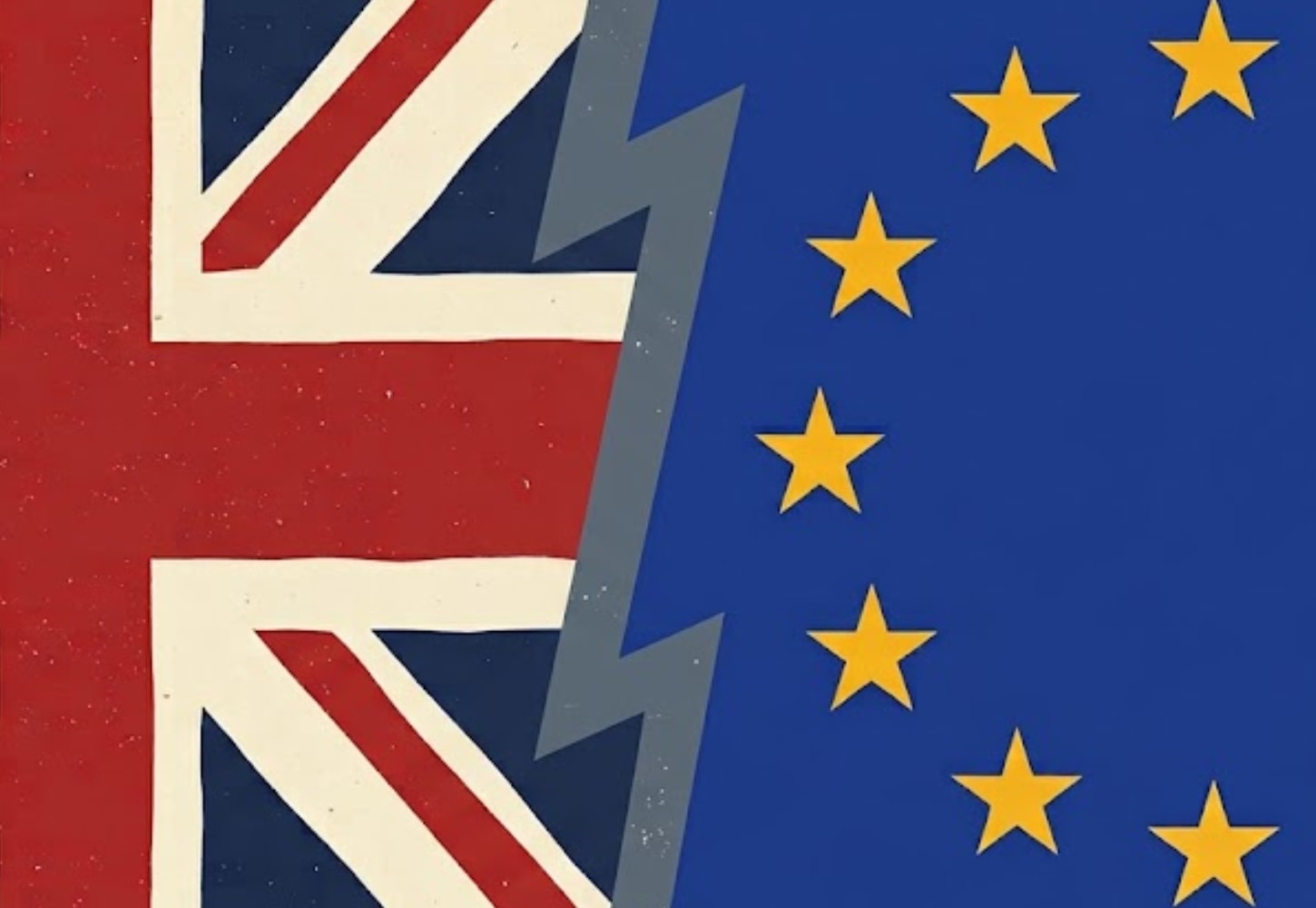
Ten years ago, on 23rd June 2016, the United Kingdom (UK) voted to leave the European Union (EU) – the first and currently only nation-state to do so. Since then, debate has raged over how Brexit affected both British and EU economic performance. Additionally, while the relationships between the UK and its European counterparts have been turbulent, they have improved in recent years in the face of Russian aggression towards Ukraine.
To mark the tenth anniversary of the referendum, this week’s Big Ask asks ten experts: How has Brexit affected Britain’s global standing?
Chief Analyst, Economic Security Forum
The 2016 Brexit vote delivered an unpleasant shock to global foreign policy elites. Yet, the messy, protracted Brexit negotiations up to 2020 arguably inflicted deeper damage on the UK’s international standing than the vote itself, exposing raw domestic divisions to European decision-makers.
However, Britain’s standing rebounded decisively in early 2022. By leading on aid to Ukraine, the UK reasserted its geopolitical relevance. This turnaround demonstrated that Brexit need not structurally undermine the UK’s foreign policy: where alignment with the EU makes sense – such as on Russian sanctions – Britain coordinates seamlessly from the outside.
Ultimately, defence capabilities remain national prerogatives. While EU members like Poland and Germany accelerate their defence spending, the UK is falling behind. This is not a direct consequence of Brexit – although a lower Gross Domestic Product (GDP) trajectory restricts fiscal space – but rather a failure to challenge entrenched domestic assumptions around tax and spending.
Jean-Claude Juncker, a frequent target of Brexiter fixation, famously noted that politicians know what to do, but not how to get re-elected after doing it. This political paralysis is today’s true threat to Britain’s global standing. In a deteriorating threat environment, lifting the defence budget to 4-4.5% of GDP, as recently advocated in a RUSI guest contribution, requires exactly the sort of political courage that the UK’s leaders currently lack.
Professor of War and Technology, Department of Politics, Languages and International Studies, University of Bath
In 2016, Her Majesty’s Government declared that it would leave the EU after losing a non-binding referendum by 52%. The subsequent negotiations with the European Commission, the Republic of Ireland, and the UK’s North Atlantic Treaty Organisation (NATO) allies ground along. There were no good solutions to the problem of Brexit, which made both Britain and the EU poorer.
The impact of Brexit on the UK’s global standing has evolved in several ways. The first is that it showed other EU members, many of which had their own Eurosceptic governments, that the cost of leaving the union was not worth it. If Britain could not do it well, then what chance did any other state have? From Estonia to Greece, the domestic politics of the EU changed.
Secondly, in the United States (US), Brexit was either championed or lampooned, depending on Trumpian Republican or Democrat leanings. However, for the rest of the world, it seems like the UK has done considerable self-harm, and that it has done so for no considerable benefit: no ideological victory, no economic benefits, no political settlements. As a result, for countries who have been largely subject to a tough, competitive trade relationship with the EU, Britain looks to have shifted into obscurity.
Of course, living in the UK, it does not feel that way. We are still here. We are still trying to sort out the post-Brexit economic, diplomatic, and political mess. Yet, with a second Trump administration, a conflict in Ukraine, a rising People’s Republic of China (PRC), and more generally the rise of multipolarity, Britain appears to be set adrift with no safe ports ahead.
Founding Director, Centre for Britain and Europe; and Head, Department of Politics and International Relations, University of Surrey
Brexit arguably inflicted immediate and tangible damage on UK-EU defence cooperation: before Brexit, Britain accounted for about 20% of all military capabilities within the EU.
Yet, the UK’s chosen form of hard Brexit placed it demonstratively outside any EU rulemaking or adjudication, including outside the €7.3 billion (£6.3 billion) European Defence Fund, from which third-country companies can only benefit under restrictive conditions, and if they operate on EU soil. Britain’s self-exclusion was not only entirely of its own making, but singlehandedly nixed any opportunity to develop even a rudimentary foreign, security, and defence relationship with the EU.
However, the threats made by Donald Trump, President of the US, to abdicate from NATO and the protection of NATO allies, and Russia’s continuing full-scale invasion of Ukraine dramatically changed the calculus for both sides. The desperate necessity facing European countries of collective rearming, and scaling up defence spending together created a powerful strategic incentive for the UK and EU to set aside post-Brexit frictions in the defence sphere. The British-French-led Coalition of the Willing emerged as a vehicle for this closer cooperation, with the UK arguing for deeper defence financing cooperation.
A central prize for Britain has been access to the EU’s proposed €150 billion (£129.4 billion) Security Action for Europe (SAFE) loan programme for military procurement, which the EU made contingent on signing a defence and security pact. The continent’s own defence industry is supportive of the plan, and with annual defence exports of roughly £9.5 billion – with a third already going to the EU – there are benefits for the UK. Unfortunately, while a rudimentary defence agreement was agreed, SAFE has proved a bridge too far.
The irony is that although many in European nations now regard Britain as closer than ever to the continent and the EU in everything from sanctions to defence, the UK remains firmly on the outside looking in. All is not lost, however. Brussels seems broadly warm to the use of concepts like ‘dynamic alignment’, and in practice, Britain generally matches the EU on sanctions and remains keen on sector-specific integration including defence. As with everything, it is down to the political will on one side, and the coordination required on the other, to move the post-Brexit dial.
Research Fellow, School of Economics, Politics, and International Relations, University of Kent
Ten years on, Brexit has produced a UK global standing that is asymmetric, uneven, and ultimately unstable – reinforced in select security domains, structurally weakened economically, and normatively compromised by a persistent inconsistency between the vision of a truly ‘Global Britain’ and demonstrated foreign policy choices.
In security terms, the UK has performed credibly. Its early and politically significant commitment to Ukraine, the AUKUS partnership, and sustained engagement in NATO frameworks confirmed that it retains meaningful diplomatic agency and institutional capacity where political will has been mobilised. The international reception in both cases confirmed that British leadership still carries weight when applied consistently.
The economic dimension tells a different story. The trade agreements pursued in the Indo-Pacific, while symbolically significant, have not compensated for the structural costs of reduced market access in Europe, and it is economic weight that ultimately conditions the credibility of foreign policy ambition. Global standing is contingent on the alignment between declared ambition, available capabilities, and the degree to which external actors receive that ambition as credible – a tension that the ‘Global Britain’ narrative consistently obscured but never resolved.
That credibility has been further eroded by normative inconsistency. A state whose international identity is premised on principled engagement with the rules-based international order cannot absorb the reputational costs of applying that commitment selectively – as the prolonged ambiguity over Palestine illustrated.
In this respect, Brexit’s deepest impact on the UK’s global standing may be less about institutional architecture than about the coherence – or absence of it – between the values that Britain claims to champion and the foreign policy choices it has proved willing to make.
Postdoctoral Fellow, Finnish Institute of International Affairs (FIIA)
Brexit has moderately weakened the UK’s ‘soft power’ with the Nordic and Baltic countries. Additional regulations on trade and travel have disappointed citizens.
In the Baltic states, Brexit is often viewed with bewilderment. Britain voluntarily dispensed with many benefits of EU membership that Estonia, Latvia, and Lithuania worked extremely hard to obtain after restoring independence in 1991, eventually gaining EU accession in 2004.
Nevertheless, from a ‘hard power’ perspective, Brexit’s effects on Northern European security remain limited. The UK has kept its promise that while leaving the EU, it remains a guarantor of European security. After 2022, Britain supported the US by providing security guarantees that bridged the NATO application-to-accession periods of Finland and Sweden. The British Armed Forces participate in NATO’s main military exercises in Northern Europe. The UK leads NATO’s Forward Land Forces (FLF) in Estonia and the Joint Expeditionary Force (JEF).
However, the consequences of Brexit still contribute to Britain’s lacklustre economic outlook. Northern European governments are concerned that financial constraints will eventually weaken the UK’s commitment to NATO’s collective defence. Brexit’s effects are also causing constant domestic political instability. After the announcement that Sir Keir Starmer is resigning as Prime Minister, His Majesty’s (HM) Government stands precariously.
Security debates in Northern European capitals are already focusing on the impact that further domestic uncertainties might have on Britain’s reliability as a security partner. While the UK has been a leading power in Northern Europe since Brexit, domestic political and economic problems currently risk its continuing ability to perform this role.
Director of Political Strategy, ThinkLabour, and Non-Resident Fellow, Atlantic Council
Brexit has had a defining and catastrophic impact on British politics with deep and lasting consequences for the UK’s standing in the world. The fact that it is about to welcome its seventh Prime Minister in the ten years since the referendum is a stark illustration of the continuing shockwaves caused by the decision to leave the EU.
The economic hit – stalling living standards, productivity growth, and investment – has made the task of delivering much-needed prosperity and improving cash-strapped public services in health, education, and the criminal justice system much harder. Paradoxically, this economic gloom has only increased public support for hard right populists like Nigel Farage, a cheerleader for Brexit. If current opinion polls were reflected in a future general election, Farage would more than likely be handed the keys to 10 Downing Street.
The rise of Reform UK, largely at the expense of the traditional centre-right Conservative Party, coupled with the governing Labour Party’s loss of support to the Greens, appears to demonstrate that the old two-party system in Britain has broken down. Long lauded for its stability and predictability, the UK post-Brexit is now marked by political fragmentation and polarisation. Already weakened by its status outside the EU, this has further reduced Britain’s standing in the world at a time when its alliances have become more important than ever.
Co-President (Research), Council on Geostrategy
The assertion that leaving the EU would permanently diminish the UK’s global standing has not been borne out by events. Instead, Brexit has had a limited impact on the nation’s international influence, and it may have even enhanced Britain’s strategic autonomy by forcing the political establishment to think independently for the country for the first time in many decades.
Free from the constraints of upholding an EU consensus, the UK has demonstrated an ability to act with agility and leadership on the world stage. This independent focus was most visible during Russia’s preparations for its full-scale invasion of Ukraine. The British response was swift, forceful, and decisive, effectively setting the benchmark for other European nations to follow. By providing advanced military aid ahead of its EU neighbours, who were disoriented by the Kremlin’s actions, London cemented its position as a critical guarantor of European security.
Furthermore, this geopolitical agility facilitated the creation of new, flexible security arrangements that would have been far more difficult to forge as an EU member state. It is highly probable that the UK would not have worked so closely with Australia and the US to form the AUKUS security partnership in 2021 had it remained bound by the collective, often slow-moving, foreign policy framework of Brussels. By enabling a deeper ‘tilt’ towards the Indo-Pacific, Brexit allowed the UK to forge minilateral alliances that will eventually reinforce European security.
Ultimately, while Brexit led to short term chaos as the country withdrew from the EU, Britain’s global standing remains robust – driven by an independent foreign policy that prioritises agility, swift action, and sovereign partnerships.
Lecturer in Security Studies and Director of David Davies Institute of International Studies, Department of International Politics, Aberystwyth University
The world in which the 2016 vote took place looks almost unrecognisable. It feels not ten but more like a hundred years ago. The massive change reveals the real cautionary tale of the Brexit referendum, namely the grand geopolitical delusion on which it was premised.
The core of this delusion had little to do with the specific beliefs on either side of the issue. At the heart of the fallacy was the assumption that change would only happen to the UK, while the world as a whole would remain largely the same – predictable and stable.
In short, Britain, one of the staunchest defenders of a rules-based international order, had decided to stake its future on a bit of freeriding. What could possibly go wrong?
We now know that the answer is a lot. The particulars may not have always been entirely foreseeable, but the post-Cold War international order exists no longer. A prudent course of action would have taken such a possibility into account.
From the UK’s perspective, the change has been most pronounced when it comes to European security. Russian hostility and aggression, American detachment, and Chinese assertiveness all mean that the foundations of British and European security will have to change. Alas, the UK now finds it much harder to shape foreign and defence policies on the wider European level, and cannot institutionally do so (including accessing funds) within the EU.
Yet, if the UK-EU relationship is to continue improving, the best bet might be that this will be spurred on by security concerns. After all, there is no virtue like necessity.
Senior Researcher, Centre for Security Studies, ETH Zürich
Brexit has done less damage to security and defence cooperation in Europe and the UK-European/UK-EU defence relationship than to other policy areas. Britain’s standing in Europe as a security and defence partner has suffered from Brexit because Brexit obviously makes it more challenging for the UK to tap into or participate in the EU’s instruments.
At the same time, NATO membership and Britain’s involvement in different minilateral formats of defence cooperation has allowed HM Government to maintain defence diplomatic ties with other European states. Perhaps the most critical point for the UK-European defence relationship was the publication of the 2021 Integrated Review, which prioritised ‘Global Britain’ while leaving many questions about the UK’s cooperation with European partners unaddressed. Ultimately, however, Britain’s steadfast support for Ukraine and leadership among European powers has wiped out many of these concerns.
Brexit may have been a structural shock for UK-European defence relations, but the shocks of Russia’s full-scale invasion of Ukraine and the policy of the second Trump administration towards the continent push Britain closer towards its European partners. Ultimately, they cannot escape the imperatives of geography.
Professor of International Security, University of Birmingham; Senior Research Fellow, The Foreign Policy Centre; and Co-founder, Navigating the Vortex
Brexit severed critical links between Britain and the EU’s defence architecture, which have yet to be restored in a meaningful way. Without any administrative arrangement with the European Defence Agency, the UK is in a worse position than Norway, Switzerland, the US, Serbia, and Ukraine. This anomaly constrains the British ability to participate in joint procurement efforts and shape EU defence standards.
Trump’s return to the White House sharply accelerated UK-EU rapprochement, producing the May 2025 Security and Defence Partnership. Considered at the time an important symbolic and structural step, the partnership soon hit a wall when talks on British participation in the SAFE programme collapsed in November 2025 and prevented the UK from bidding in the loan facility for defence investment.
The European Parliament has called for talks to resume, and HM Government has signalled openness to this idea, but with a government in transition and the July 2026 summit likely to be postponed, the deadlock remains.
Not all is doom and gloom, however. The conflict in Ukraine has provided Britain with an opportunity to reassert some of its traditional European defence leadership, albeit outside EU structures. Co-chairing the Coalition of the Willing with France – now 34 nations strong and planning for a potential multinational peacekeeping force in Ukraine – has given the UK some of its former clout back, not least because British hard power credibility has remained, even if its soft power has declined in the wake of Brexit.
The bottom line is that the UK is too large, too capable, and too important to be treated as a peripheral third country orbiting around the EU defence core. If this persists, Britain’s exclusion from EU defence industrial cooperation would be a genuine long-term cost for European security, not just EU security.
The deeper post-Brexit institutional estrangement between the UK and the continent that underpins the mismatch between what is needed and what is currently possible is a problem beyond security and defence. However, the urgency of security and defence could be the trigger for a proper reset under the country’s next government.
If you enjoyed this Big Ask, please subscribe or pledge your support!
What do you think about the perspectives put forward in this Big Ask? Why not leave a comment below?
From an antipodean perspective I find it hard to understand why the UK continues to assert geopolitical influence within the Indo-Pacific region while apparently overlooking Africa and Latin America. The UK has significant industrial and commercial capability and capacity but seems unwilling to apply these strengths to best advantage. Happy to stand corrected :-)
As a lifelong Anglophile German, I strongly support England rejoining the EU. However, I see various obstacles: a lack of courage and will on the English side, and petty nationalism on the part of some member states.