

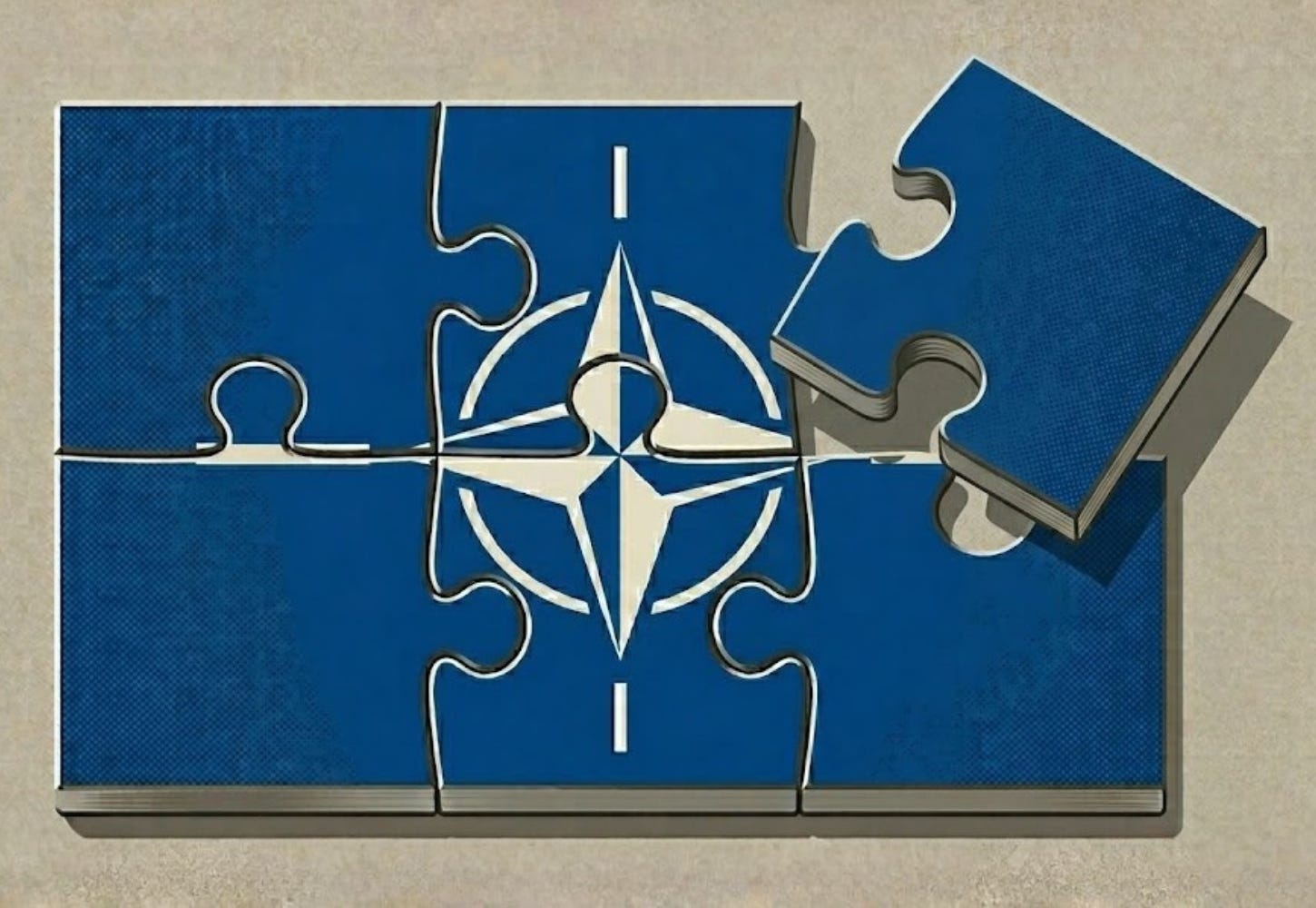
European nations are rearming at a pace not seen since the Cold War. Russia’s full-scale invasion of Ukraine has triggered a surge in defence spending, new procurement programmes, and renewed attention to deterrence. Yet, despite this mobilisation, European military power remains fragmented – and, in some respects, risks becoming even more so.
The central problem is not technical. European countries do not lack institutions, frameworks, or expertise. The North Atlantic Treaty Organisation (NATO) provides established interoperability standards and integrated planning, while the European Union (EU) has begun to mobilise significant financial instruments for defence. Rather, fragmentation persists because it reflects deeper political and strategic divisions among European states. These divisions limit the scope for meaningful capability specialisation – the shortest pathway to a more efficient and credible European defence posture.
This presents both a constraint and an opportunity for the United Kingdom (UK). As a leading military power outside the EU, but central to European security, Britain is a necessary partner in shaping a more flexible model of defence integration adapted to European realities.
Fragmentation as a political choice
European defence fragmentation is often described as the result of inefficient procurement or insufficient coordination. While these factors matter, they are symptoms rather than causes. At its core, fragmentation reflects the persistence of national sovereignty in defence policy. Simply put, European states do not fully agree on the purpose, scope, or future direction of defence integration.
Countries on NATO’s eastern flank – particularly Poland and the Baltic states – prioritise immediate readiness against Russian aggression and remain strongly committed to the alliance. For them, rapid capability acquisition and American security guarantees are paramount. By contrast, France continues to frame defence integration in terms of European strategic autonomy, focusing on strengthening continental capacity to act independently of the United States (US) when necessary.
Germany occupies a middle position, seeking to reconcile NATO commitments with industrial policy objectives and ambitions for technological sovereignty. Southern European states, meanwhile, often approach defence cooperation through the lens of burden sharing and industrial participation, shaped as much by domestic economic considerations as by strategic priorities.
Moreover, neutral or militarily non-aligned EU member states, including Austria and the Republic of Ireland, remain cautious regarding deeper defence integration. While this reflects constitutional constraints and political sensitivities surrounding military alignment, it also entails their factual continued reliance on the security provision of more actively engaged European partners, instead of a model of armed neutrality – like that of Switzerland – that would indirectly contribute to the continent’s collective defence.
These divergent perspectives extend beyond strategy into defence industrial policy. Governments continue to view defence procurement as a tool of economic policy, technological development, and employment protection. Control over critical supply chains and industrial capacity is increasingly associated with strategic resilience. As a result, states remain reluctant to accept cross-border consolidation when it threatens national industrial capabilities or political influence.
This helps to explain why European defence continues to be characterised by duplication – encompassing multiple tank programmes, competing combat aircraft projects, and fragmented naval procurement. These are not so much industrial inefficiencies as they are political choices.
Britain’s role in a divided Europe
Brexit has complicated the defence landscape, but it has not diminished the UK’s strategic importance. Britain remains one of Europe’s most capable military powers: a nuclear state, a leading defence industrial actor, and a central player within NATO. Any model of European defence that excludes the UK is therefore structurally incomplete.
The post-Brexit relationship between Britain and the EU has begun to stabilise, with the 2025 establishment of a Security and Defence Partnership providing a framework for dialogue and cooperation in areas such as cyber security, maritime operations, and defence research. However, this arrangement remains limited, and the UK continues to stand outside key EU defence industrial instruments.
In practice, Britain has adapted by deepening bilateral and minilateral defence cooperation. The Lancaster House Treaties and the Northwood Declaration with France continue to underpin close operational collaboration between Europe’s two nuclear powers. More recently, the Kensington Treaty with Germany has signalled renewed efforts to strengthen British-German defence ties across operational and industrial domains. At the same time, the UK-led Joint Expeditionary Force (JEF), linking ten Northern European countries, has emerged as a flexible framework for regional security cooperation and rapid response. Most recently, on 27th May, the British-Polish Northolt Treaty on a Security and Defence Partnership was signed.
The Northolt Treaty is particularly significant in this regard. Beyond reaffirming commitments to defence cooperation and strategic consultation, it highlights the growing importance of bilateral frameworks in addressing the political constraints on broader European defence integration. Crucially, the treaty is explicitly anchored in NATO obligations, reinforcing the Alliance as the primary framework for European security rather than generating alternative institutional pathways. Bringing together two countries with convergent threat perceptions and a strongly Atlanticist outlook, it reflects a wider shift towards cooperation among like-minded allies within NATO. Such agreements can therefore complement the Alliance by enabling more targeted forms of capability development and coordination, without requiring full strategic convergence across Europe.
These developments point towards a broader shift in European defence cooperation. Rather than converging towards a single institutional model, Europe is evolving into a more flexible ecosystem of overlapping arrangements: NATO, EU mechanisms, bilateral agreements, and minilateral coalitions. It aligns with the UK’s longstanding preference for flexible, coalition-based approaches to security cooperation and reinforces its role as a central connector within Europe’s evolving security architecture. However, Britain’s ability to sustain this role depends on the rapid strengthening of its own military capabilities after a prolonged period of underinvestment and force reductions.
Minilateralism and the future of specialisation
Full strategic convergence among European states remains unlikely in the near term. Divergent threat perceptions, political priorities, and industrial interests will continue to constrain large-scale integration. In this context, the most realistic pathway towards greater efficiency lies in selective capability specialisation within smaller, like-minded groups of states.
Minilateral frameworks, such as the JEF and emerging groupings on NATO’s eastern flank, are particularly well suited to this approach. They bring together countries with shared threat perceptions, stronger political trust, and greater willingness to coordinate force development. Unlike broader European frameworks, they can move more quickly and avoid many of the political disputes associated with EU-level initiatives.
Specialisation is most feasible in high-cost, high-complexity capability areas. Strategic airlift; missile defence; Intelligence, Surveillance, and Reconnaissance (ISR); logistics; and cyber capabilities are natural candidates. These sectors require sustained investment and offer clear benefits from pooling resources and reducing duplication.
However, even in these areas, progress will depend on political incentives rather than institutional designs. Governments will not accept specialisation if it is perceived to undermine sovereignty or damage domestic industries. Instead, cooperation must be framed as enhancing national capabilities through burden sharing.
Standardisation is equally important. European countries’ proliferation of military platforms reduces interoperability and increases costs. Incremental convergence around existing systems, such as on the F-35 Lightning II Joint Combat Aircraft or shared air defence solutions, offers a more realistic path forward than ambitious but contested new programmes. Convergence should also be pursued in emerging areas such as drone warfare, where political and bureaucratic barriers to international cooperation are less entrenched than in legacy systems.
Why NATO remains central
Despite the growing role of EU initiatives, NATO remains the only politically acceptable framework for large-scale capability coordination across Europe. It accommodates both EU and non-EU members, preserves the American strategic anchor, and provides established structures for planning and interoperability.
By contrast, EU defence integration remains politically contested. Instruments such as joint financing programmes represent an important step forward in industrial coordination, but they also highlight underlying tensions over governance, access, and strategic orientation. For countries such as the UK, participation in these mechanisms remains constrained.
In this context, a NATO-centric model of defence integration, supplemented by EU financial tools and regional initiatives, appears more politically viable than a fully integrated European defence system. The challenge is not the absence of institutional frameworks, but the lack of sufficiently strong incentives to encourage states to use them more effectively.
What Britain could do
If fragmentation is political, then overcoming it requires political leadership. The UK is well placed to provide it. Firstly, it should prioritise minilateral defence cooperation as the primary vehicle for capability integration. Strengthening the JEF and expanding partnerships on NATO’s eastern flank, as well as deepening cooperation with France and Germany, would allow Britain to shape patterns of specialisation among like-minded states.
Secondly, the UK should focus on leading in specific capability areas. It already possesses comparative advantages in intelligence, cyber operations, maritime power, air power, and advanced defence technologies. Concentrating investment in these sectors would enable Britain to act as a hub within broader European capability networks.
Thirdly, the UK should seek pragmatic engagement with EU defence initiatives. While full participation in EU mechanisms may not be feasible, selective cooperation – particularly in areas such as research, innovation, and supply chain resilience – could benefit both sides.
Finally, Britain should reinforce NATO as the central framework for European defence. This means not only maintaining strong commitments to the alliance, but also using NATO structures to promote standardisation, interoperability, and coordinated capability development.
Conclusion
European defence fragmentation is not the result of a lack of institutions or technical solutions. It reflects enduring political divisions over sovereignty, strategy, and industrial policy. These divisions will not disappear in the near term.
However, fragmentation is not inevitable. Through selective capability specialisation, minilateral cooperation, and incremental standardisation, Europe can build a more coherent and effective defence posture. This process should not be aimed so much at building a unified European army as reducing the costliest forms of duplication and strengthening collective deterrence.
In a period of geopolitical uncertainty amid renewed Russian aggression and American strategic repositioning, European countries – although they can never fully specialise – should work together to move the dial further towards specialisation to improve returns on investment. The balance struck by nations closer to the immediate threat should be emulated more widely across NATO.
Dr Przemyslaw Biskup, Senior Lecturer at the SGH Warsaw School of Economics and Senior Research Fellow in the European Union Programme, Polish Institute of Foreign Affairs (PISM).
This article is part of the Council on Geostrategy’s Strategic Defence Unit.
To stay up to date with Britain’s World, please subscribe or pledge your support!
What do you think about this Memorandum? Why not leave a comment below?
The UK needs to pivot away from reliance in the US. Further purchasing of F-35s is exactly what we should not be doing. I also think much of the SDR needs to be re-written as it is still too focussed on maintaining US reliance in my opinion. Given the financial and programme debacles surrounding many defence projects I would want confidence that they are going to significantly improve UK resilience and provide VFM before increasing defence spending. Handing over large sums of money to US defence contractors for weapons that we might not be able to use doesn't improve our defences.
One of the best contributions the UK could make would be to help mitigate the waning reliability of the US nuclear umbrella. Its recent participation in US nuclear sharing does not of course do much in that direction, since UK deployment of US tactical nuclear weapons on its jets is under the control of the US. If the UK reacquired its own nuclear gravity bombs it could operate a UK version of the current French "forward deterrence" and/or nuclear-sharing with other NATO allies. This would be an ideal combination of UK specialisation with UK cooperation with France and with non-nuclear allies. This is a point I shall make in an upcoming blog.